Drivers with business context
Use operational measures to make the assumptions in a financial model easier to explain.

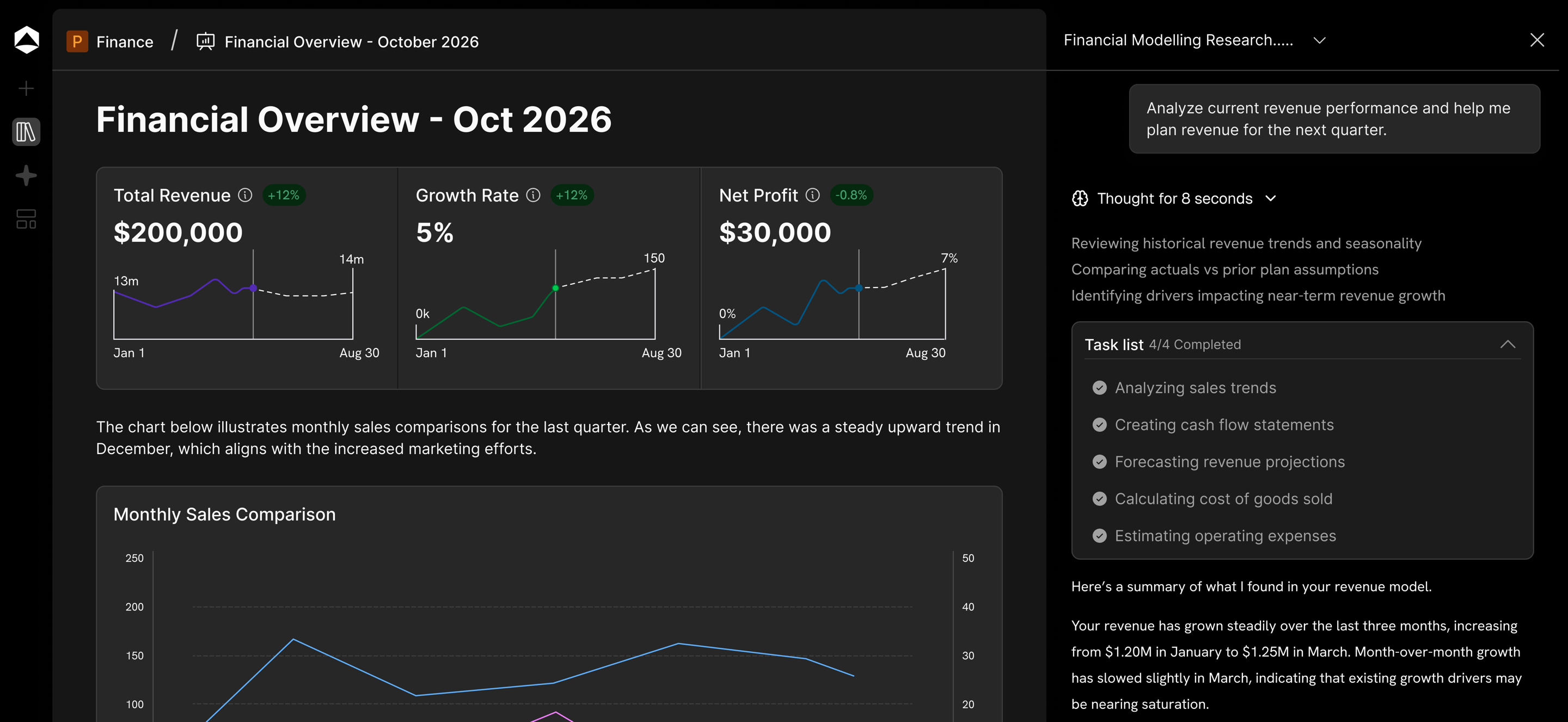
Connect operating data to the drivers behind the forecast.
Request DemoUse the operational tables your business already maintains to inform financial planning. Define the measures and dimensions that matter, then connect them with the assumptions behind revenue, cost, and growth.
Use operational measures to make the assumptions in a financial model easier to explain.
Align the model with the definitions your data team maintains.
Discuss the relevant customer, product, or business unit alongside the financial total.
Choose the data scope, field mapping and refresh schedule your workflow needs, and Oculon keeps it current from then on.
Tell us which MongoDB data you work with and the decisions it should support.
Review the access, data scope, mappings, and refresh requirements together.
Bring the agreed inputs into your models and review the first planning workflow with your team.