Drivers with business context
Use operational measures to make the assumptions in a financial model easier to explain.

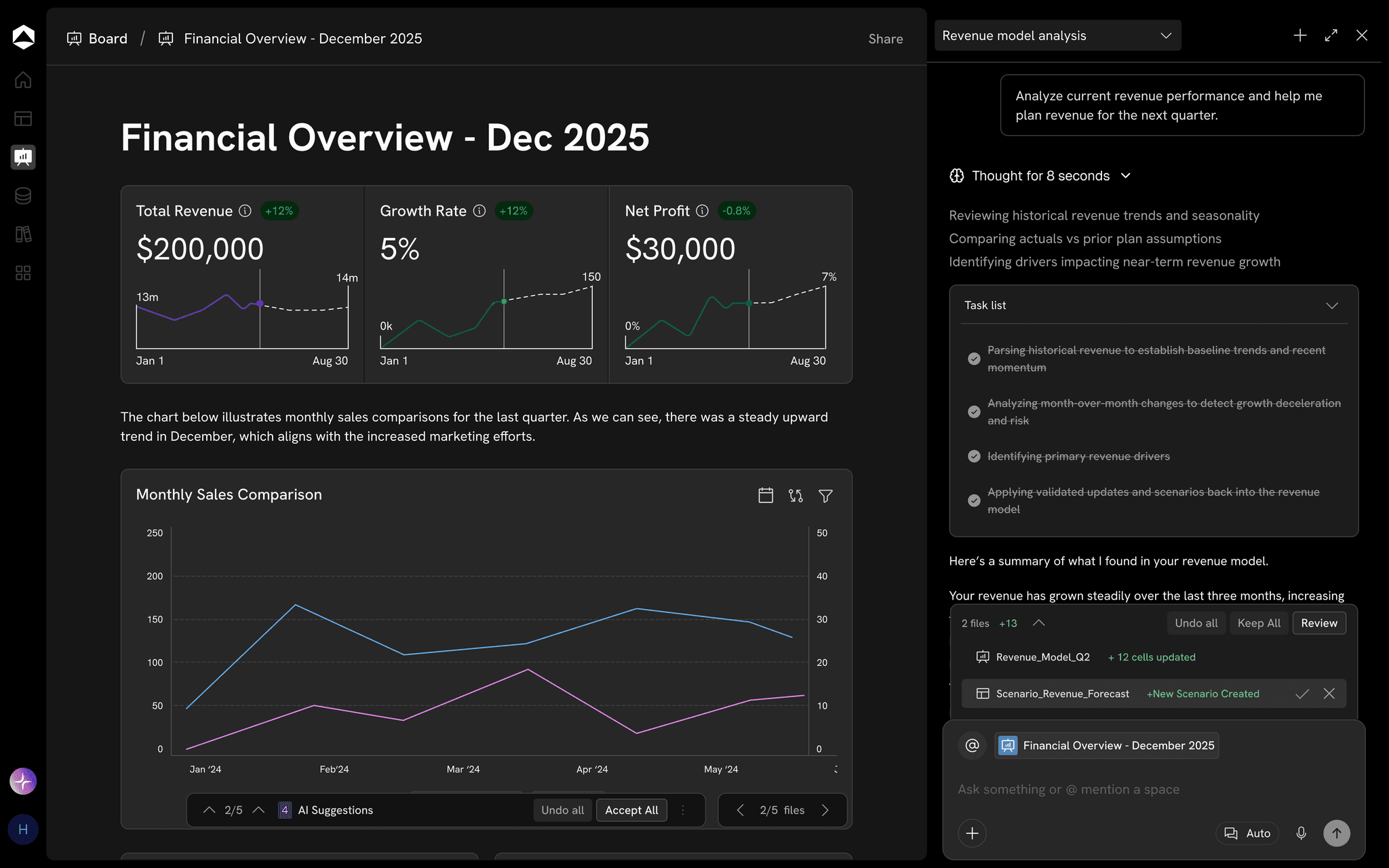
Operational data for the drivers behind your forecast.
Request DemoBusiness contextUse the operational tables your business already maintains to inform financial planning. Define the measures and dimensions that matter, then connect them with the assumptions behind revenue, cost, and growth.
Use operational measures to make the assumptions in a financial model easier to explain.
Align the model with the definitions your data team maintains.
Discuss the relevant customer, product, or business unit alongside the financial total.
Agree on the data scope, field mapping, and refresh requirements for your workflow with the Oculon team.
Tell us which Snowflake data you work with and the decisions it should support.
Review the access, data scope, mappings, and refresh requirements together.
Bring the agreed inputs into your models and review the first planning workflow with your team.