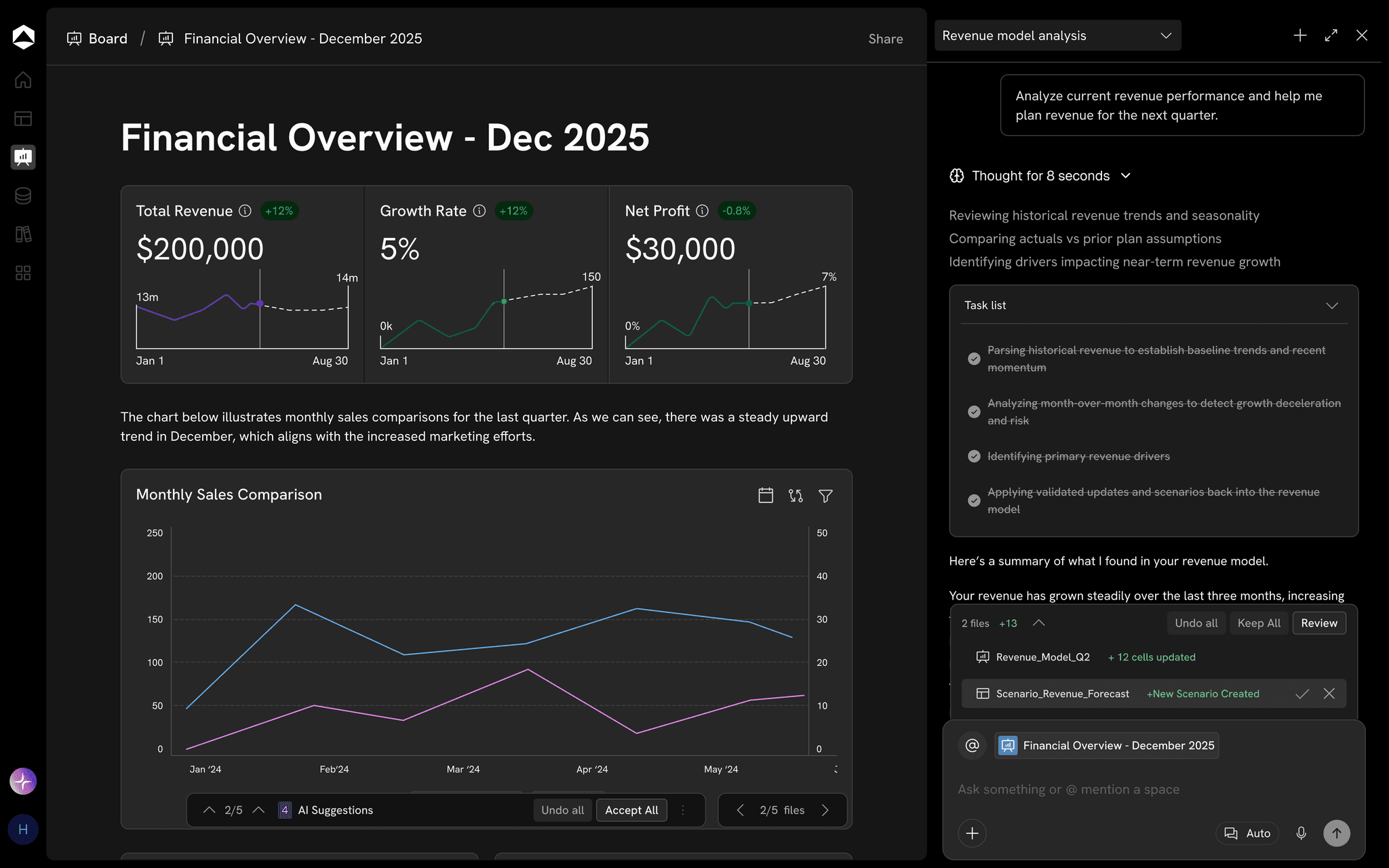
Use cases · Oculon for Cash Flow & Runway
Cash Flow & RunwayKnow the cash commitment before you make it.
Compare collections and spending assumptions. See how a change affects both simple runway and the point cash crosses a minimum buffer.
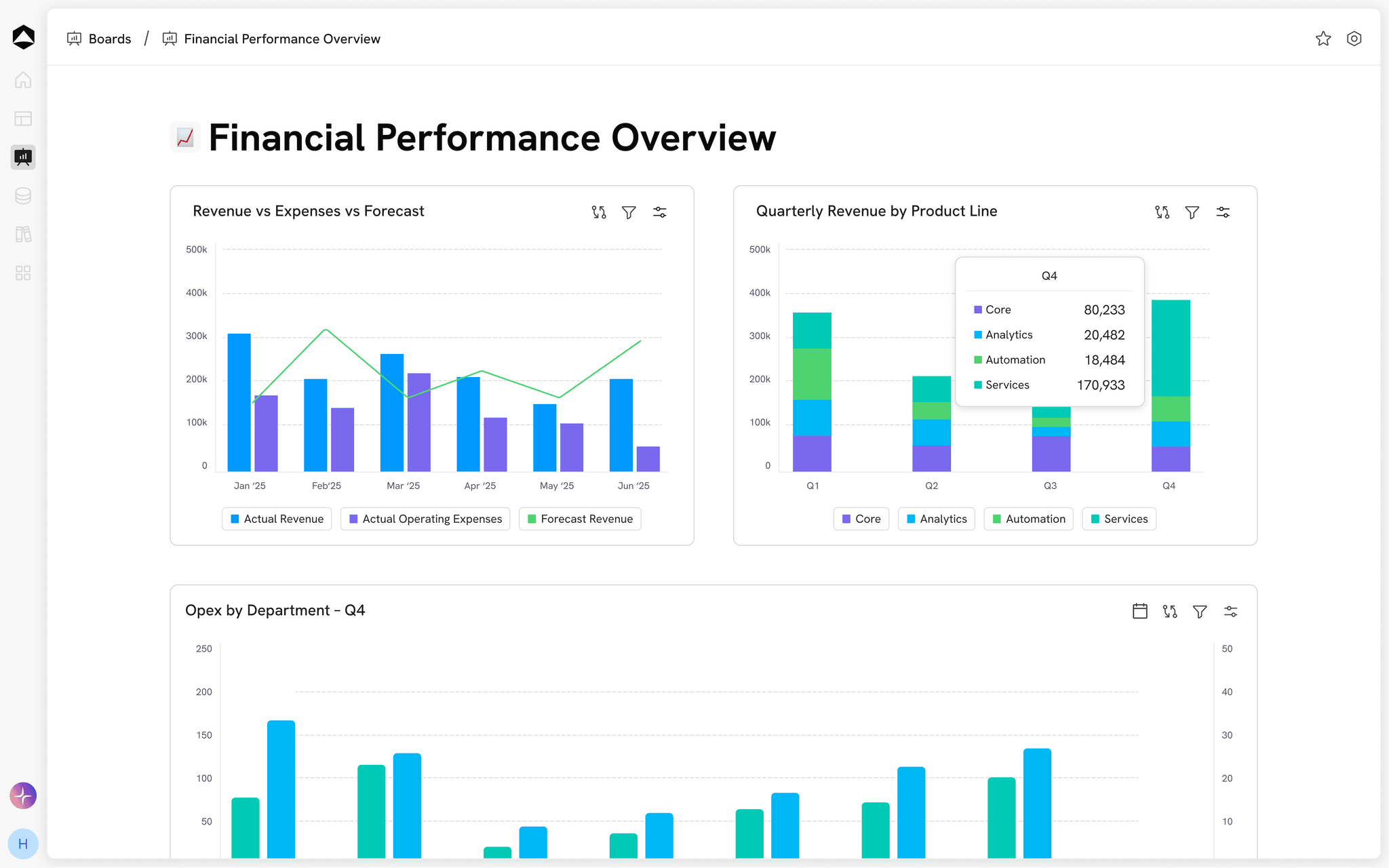
The decision behind the work
Make cash part of every planning decision.
For Finance leaders and founders.
Separate cash from revenue
Start with what customers pay and when commitments become payments.
Compare the commitment
Keep the opening balance and collection assumption fixed to isolate a spending choice.
Watch the buffer
Review the month cash crosses a stated threshold, as well as the simple runway number.
From context to the next move
Put the plan to work.
Keep the inputs, model and review connected around the work in front of you.
Connected inputs
Plan around timing
Keep collections, payroll, and committed payments close to the model.
Explore connected data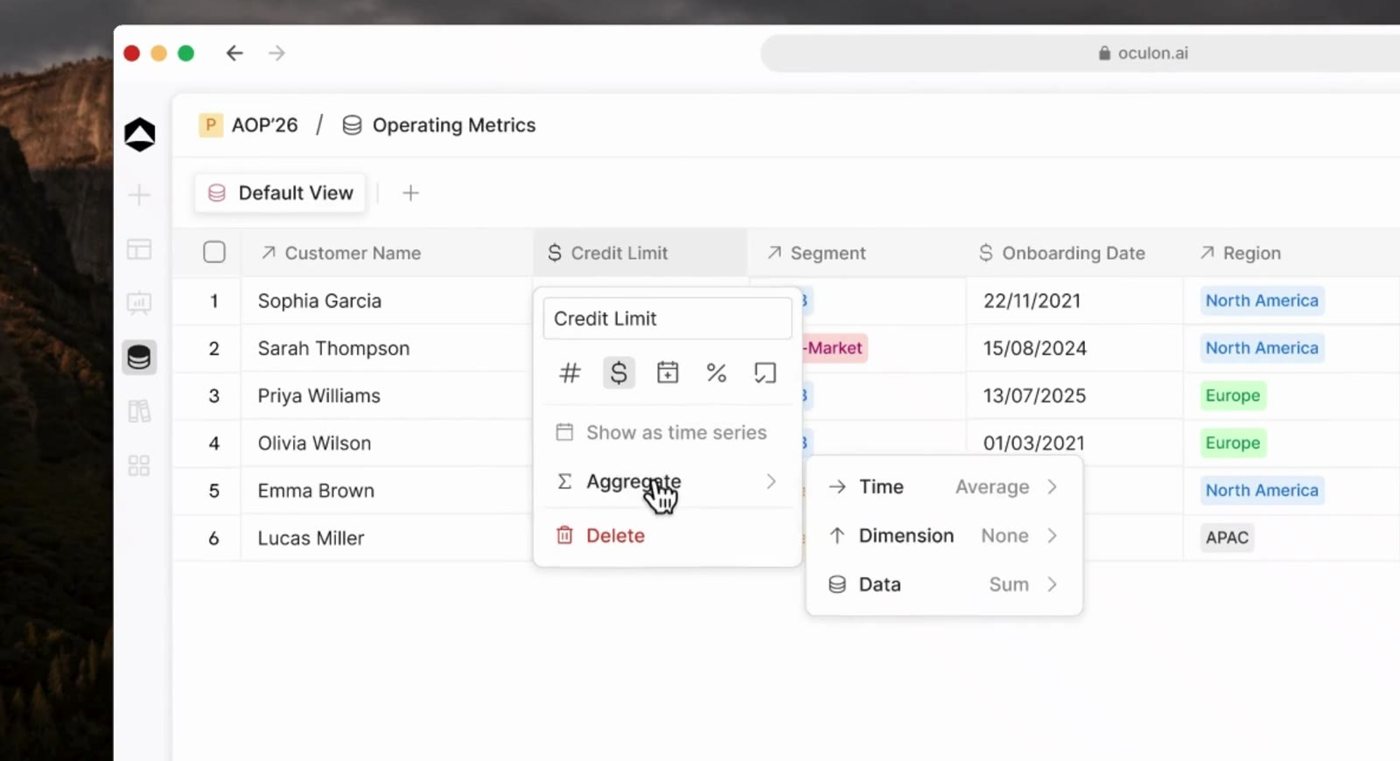
Business drivers
Connect the operating plan
Follow a hiring or spending change through to the cash forecast.
Explore financial models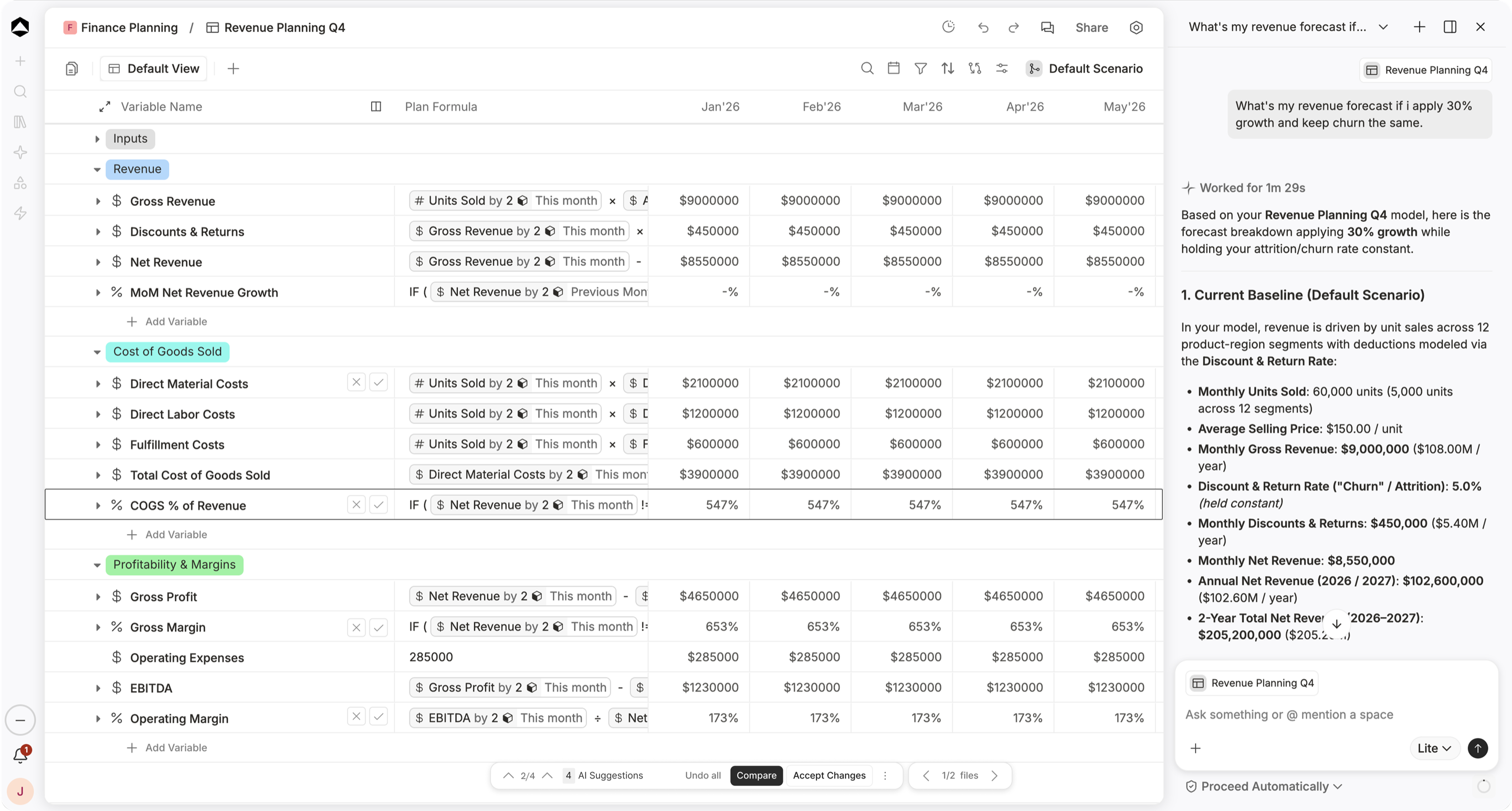
Planning choices
Compare the trade-offs
Review growth, spending, and cash outcomes together before choosing a path.
Explore scenarios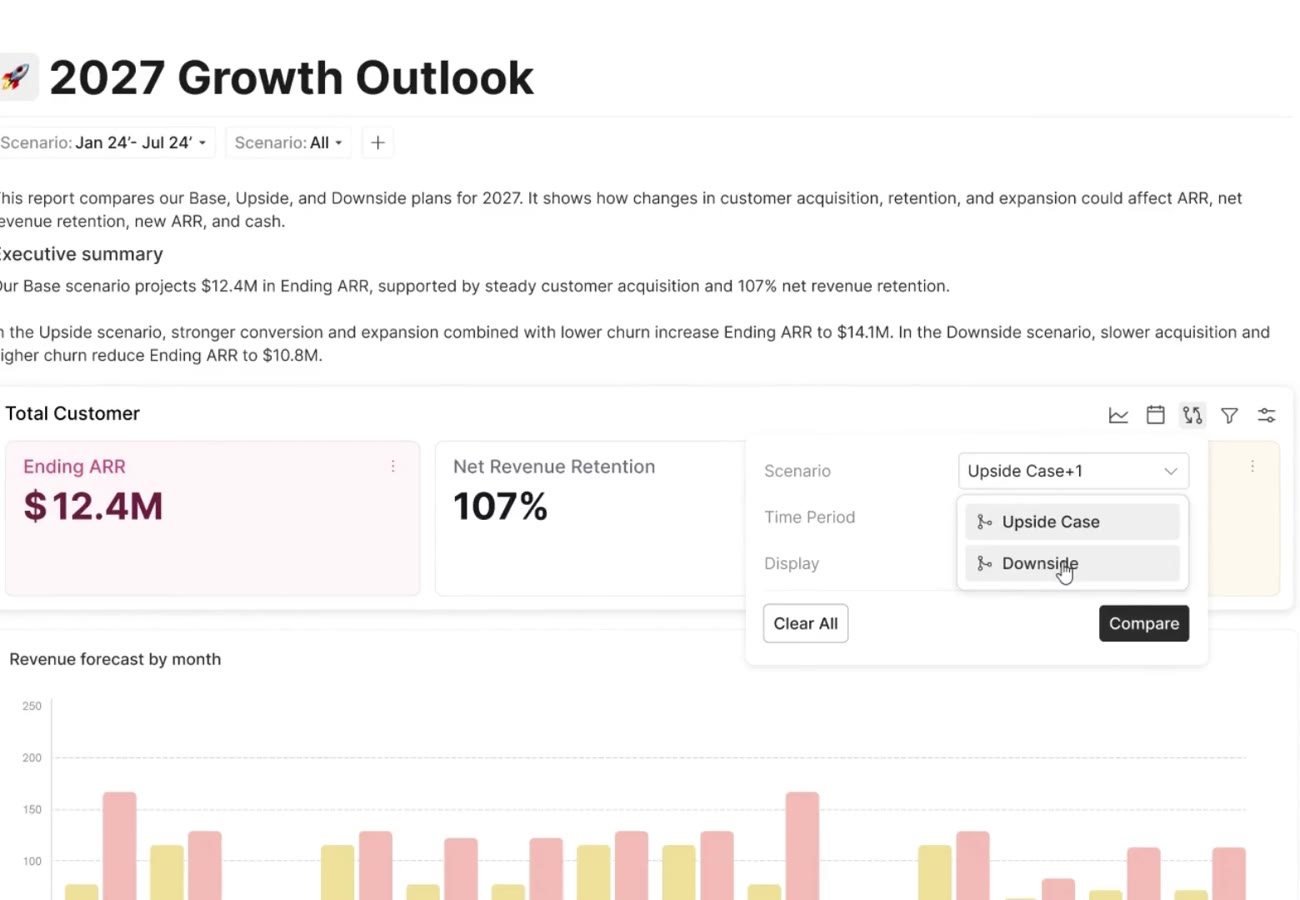
Shared review
Watch the buffer
Review the actual due dates and collection assumptions before relying on a constant-burn runway for a commitment.
Explore shared boards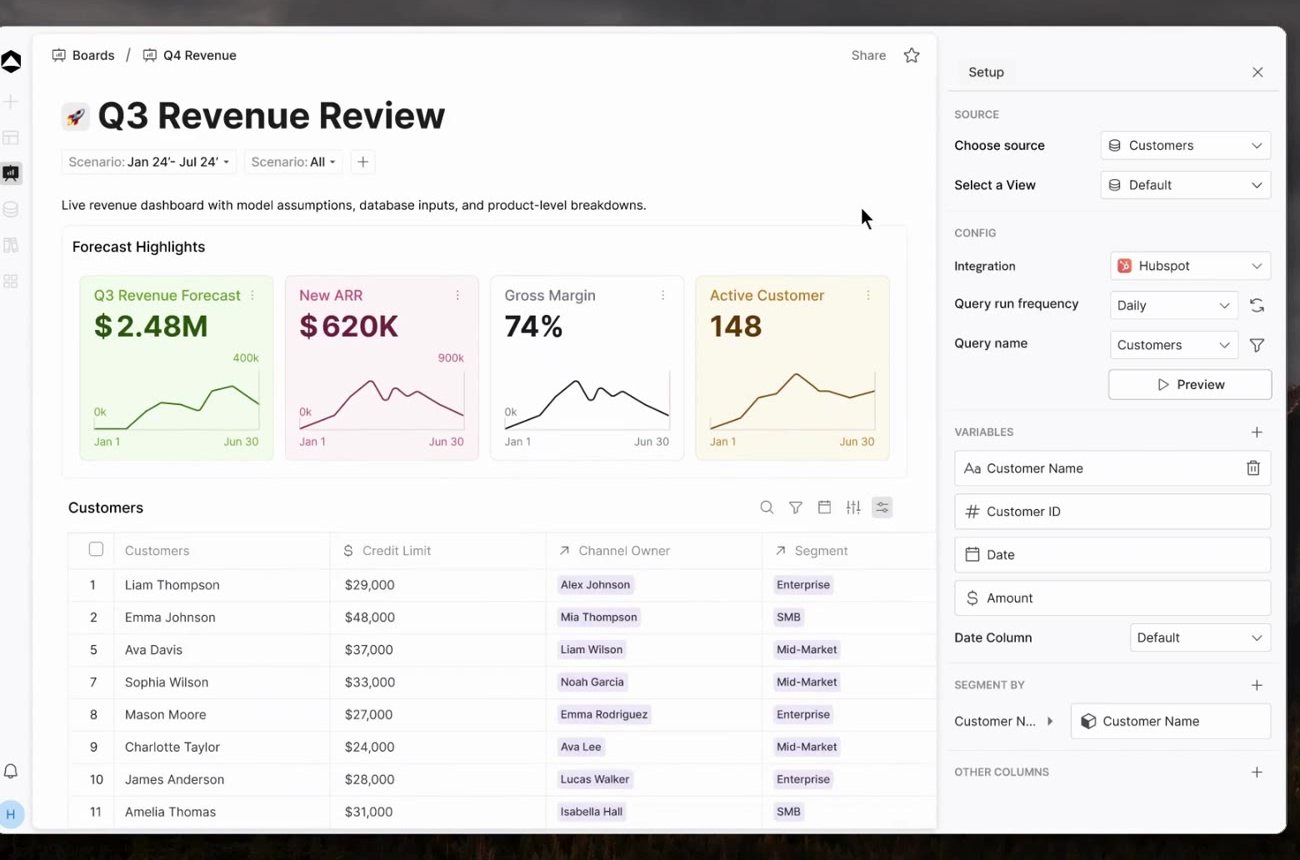
One connected financial picture
What does $60K less monthly spending change?
Review the actual due dates and collection assumptions before relying on a constant-burn runway for a commitment.
Explore the cash outlook example
Net burn = people payments + other payments − collections. Simple runway = starting cash ÷ constant monthly net burn.
October 2026–March 2027 · monthly · Illustrative dataEXPLORE THE DECISION
What does $60K less monthly spending change?
Projected closing cash
$ millionsInspect the model inputs3 model lines
| Cash driver | Monthly assumption | Timing | Context |
|---|---|---|---|
| $650K | Monthly | Base case | |
| $700K | Monthly | Current hiring plan | |
| $250K | Monthly | Operating commitments |
Scroll to inspect all columns
Collections and burn remain constant. The $1M buffer is an illustrative policy assumption; taxes, debt, capital spend, and uneven payment dates are excluded.
A little more context
Questions about Cash Flow & Runway.
Is runway just cash divided by burn?
That is a useful simple illustration when net burn stays constant. A connected cash forecast should also reflect changing revenue, collections, payment timing, and other assumptions. The example on this page states its simplifying assumptions.
Why show a cash buffer as well as runway?
Running out of cash is not the only constraint. A minimum operating buffer can trigger a decision earlier. The example assumes a $1M buffer and constant payments; your policy and actual payment calendar may differ.
What should we agree before comparing plans?
Net burn = people payments + other payments − collections. Simple runway = starting cash ÷ constant monthly net burn.
Where can we find a starting model?
Explore templates for planning, revenue, cash, headcount and reporting. Adapt the assumptions and structure to your business, and agree access with the people who will review the work.
Explore templates