Use cases · Oculon for Budgeting & Forecasting
Budgeting & ForecastingReforecast with the why behind every change.
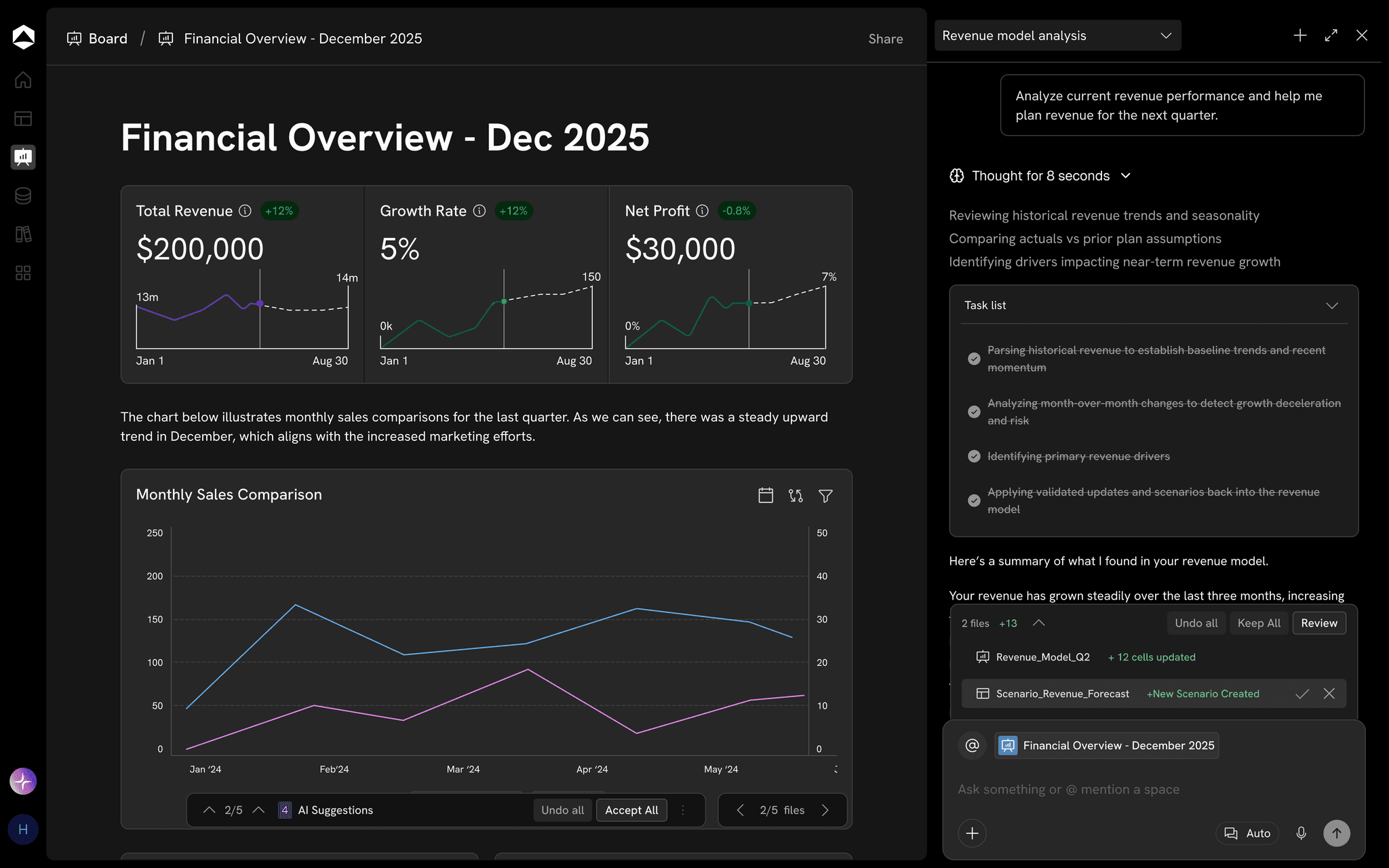
Actuals have arrived. The growth plan has changed. Bring the remaining-year assumptions into view and understand what the new outlook means for profit.
The decision behind the work
Keep the plan connected to what actually happens.
For FP&A and budget owners.
Start with the same close
Keep the actuals cutoff and account definitions visible, so the forecast begins from an agreed baseline.
Explain the movement
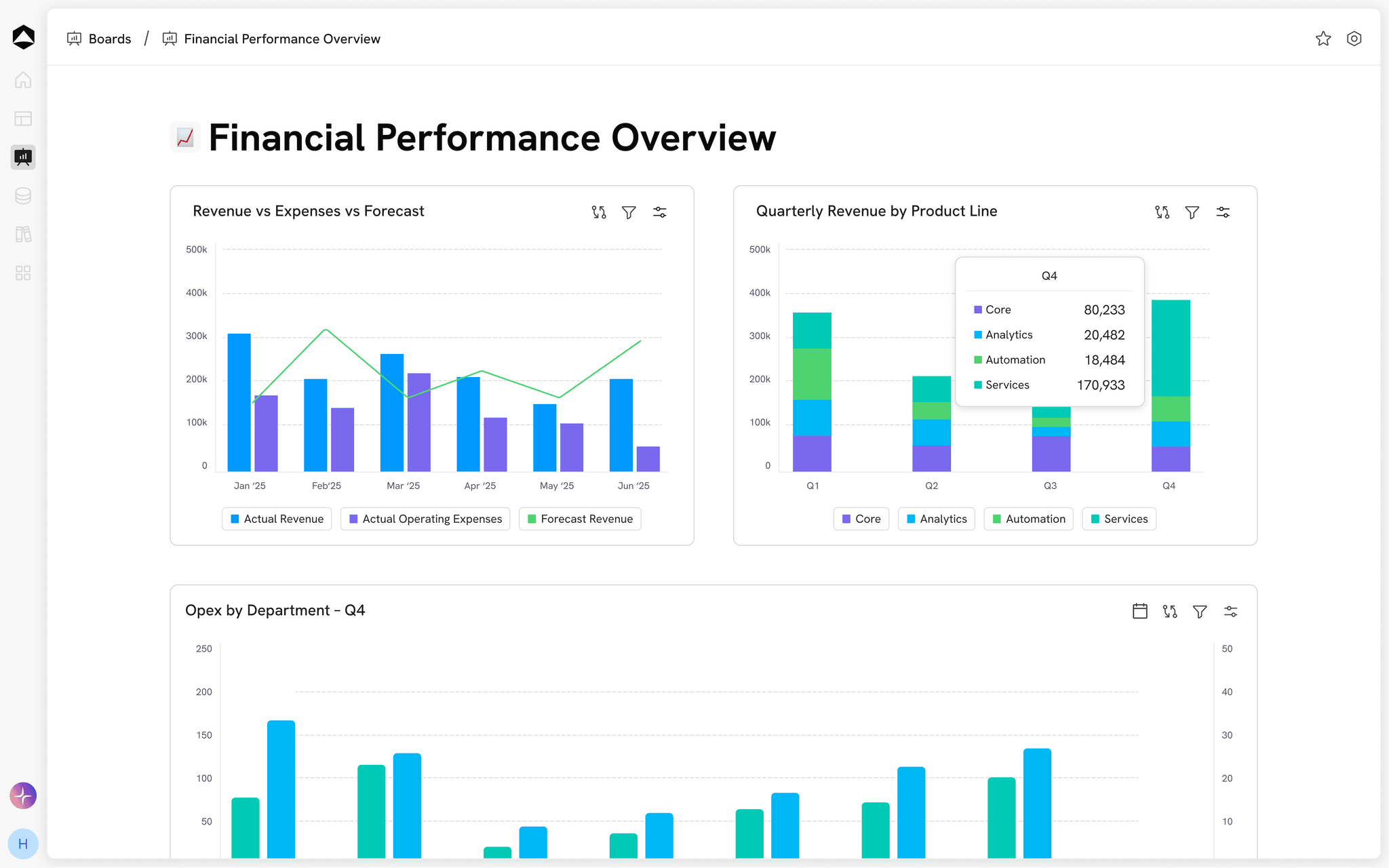
Separate revenue upside from the direct, people, and operating costs required to deliver it.
Review the investment
Bring the profit effect and open cash assumptions to the owners who will commit the spend.
From context to the next move
Put the plan to work.
Keep the inputs, model and review connected around the work in front of you.
Connected inputs
Start from the actuals
Bring closed periods into the model and focus the forecast on the months ahead.
Explore connected data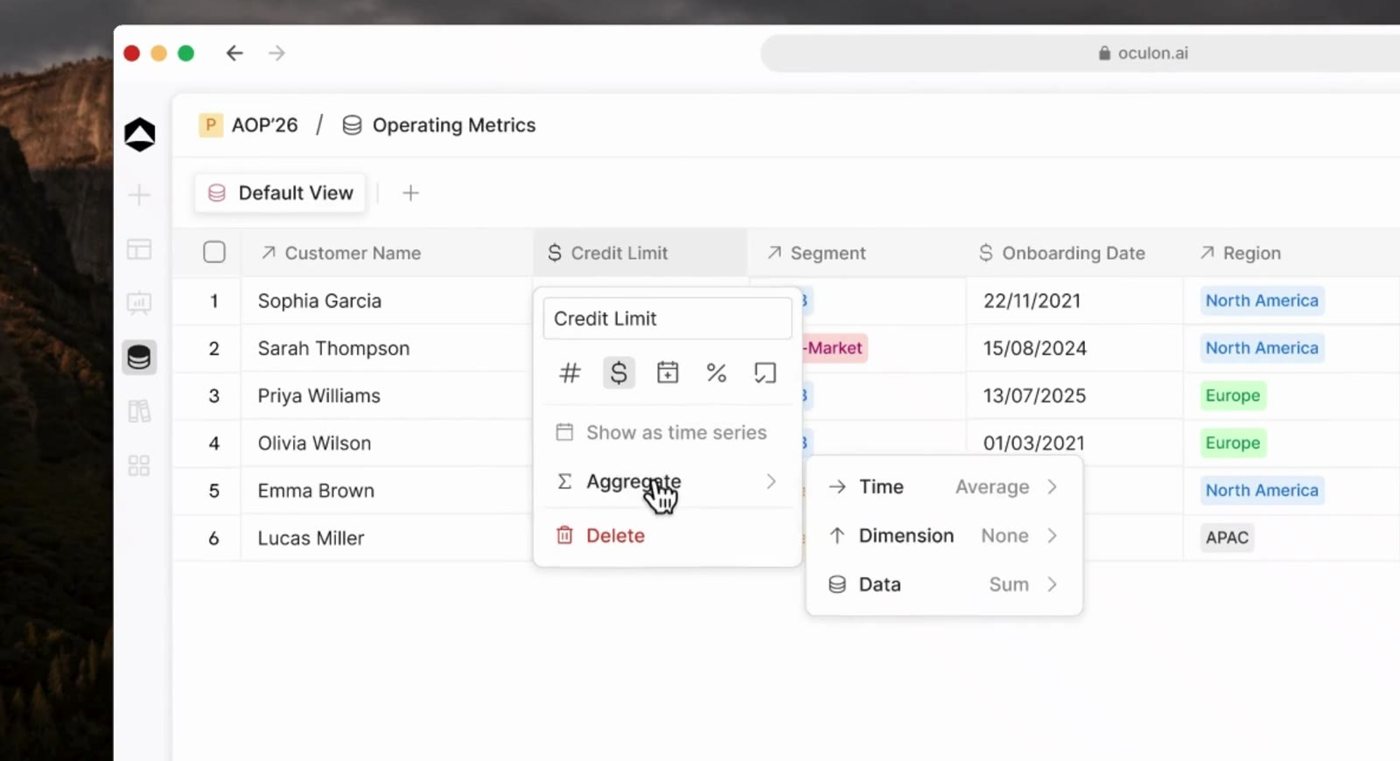
Business drivers
Plan around business drivers
Connect revenue, hiring, and operating assumptions so each change has a clear financial effect.
Explore financial models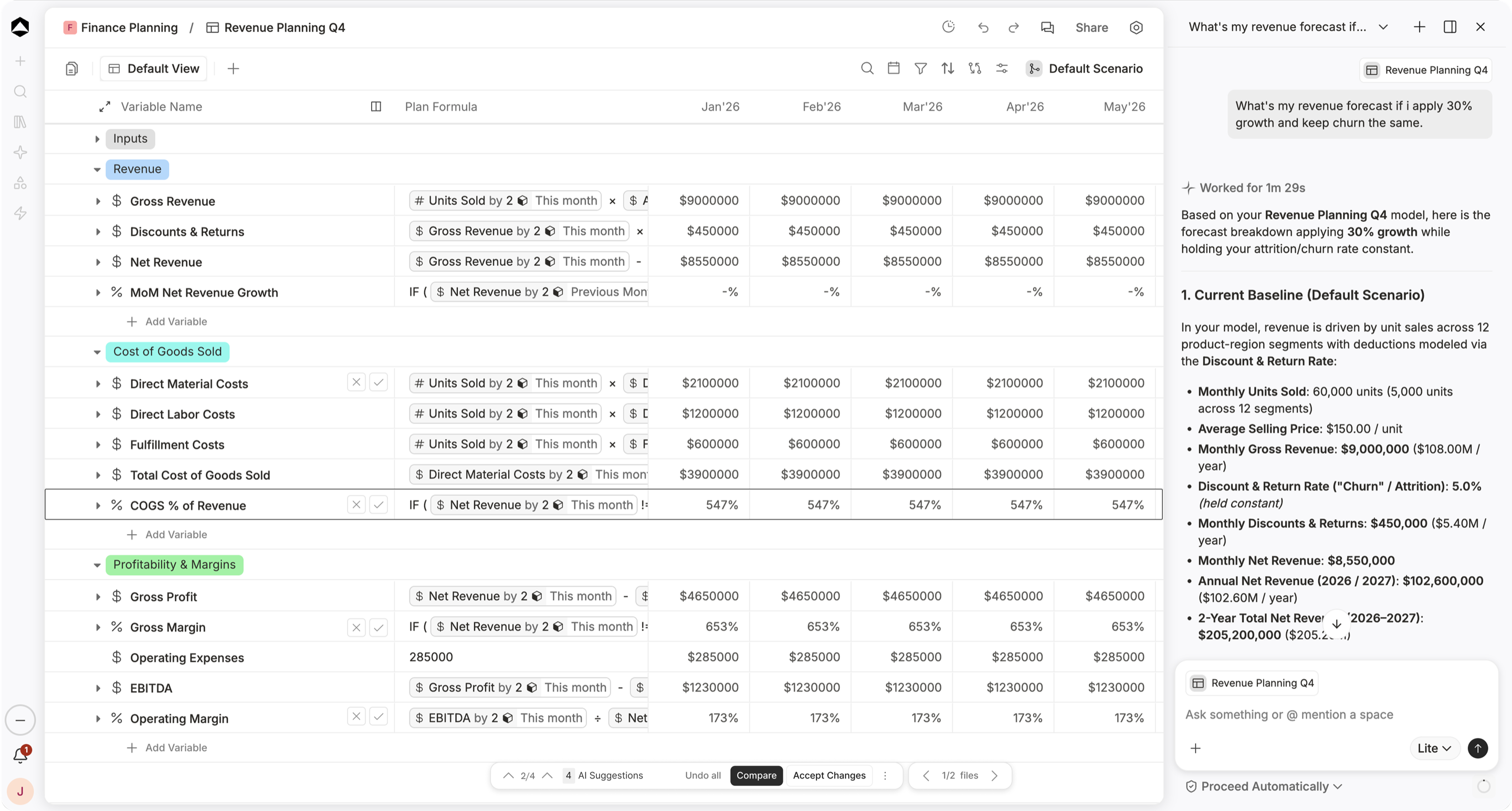
Planning choices
Keep the budget in view
Compare the working forecast and alternatives against the approved plan with the same definitions.
Explore scenarios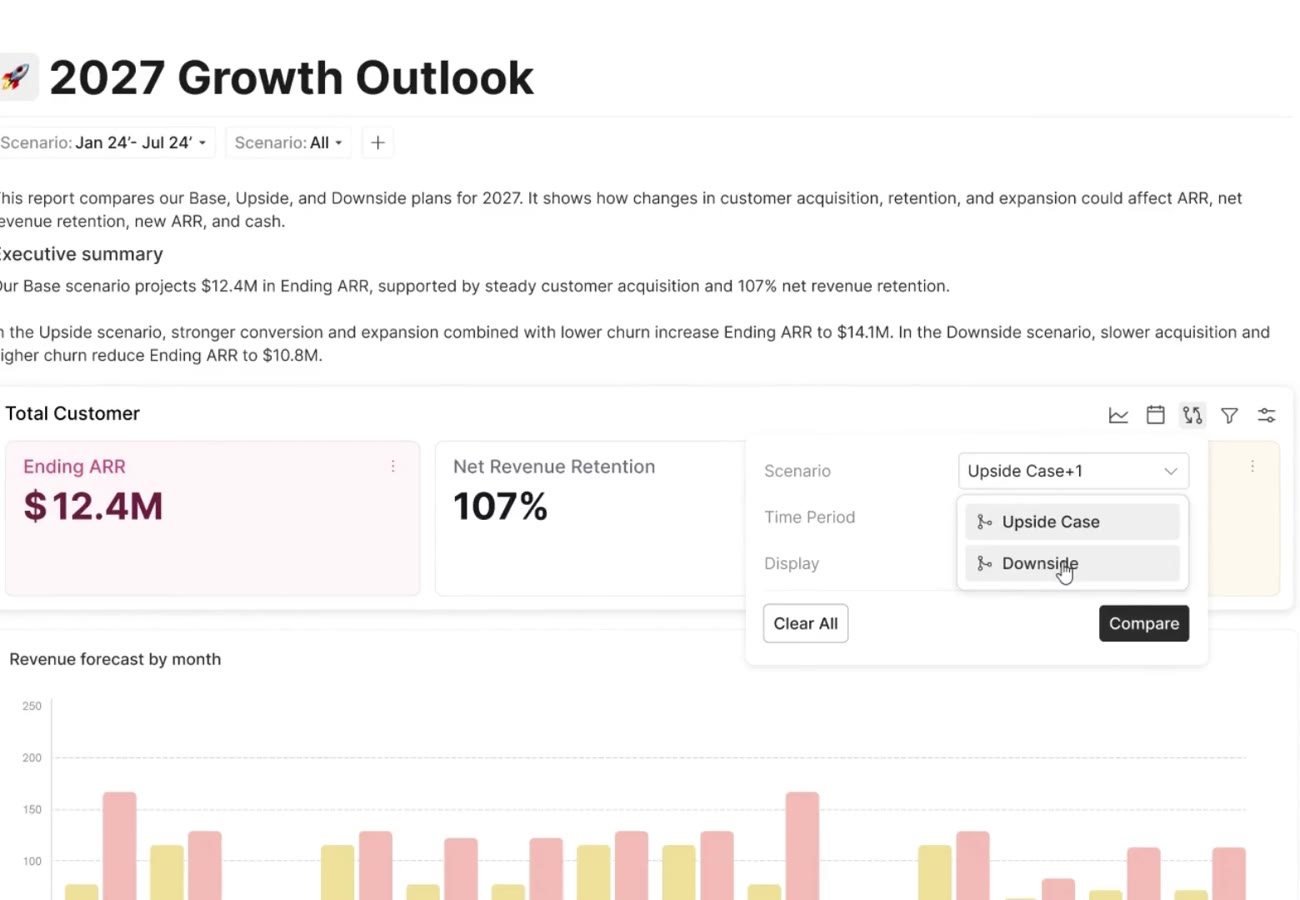
Shared review
Review the investment
Review the additional delivery, hiring, and operating commitments before carrying the growth alternative into the next forecast.
Explore shared boards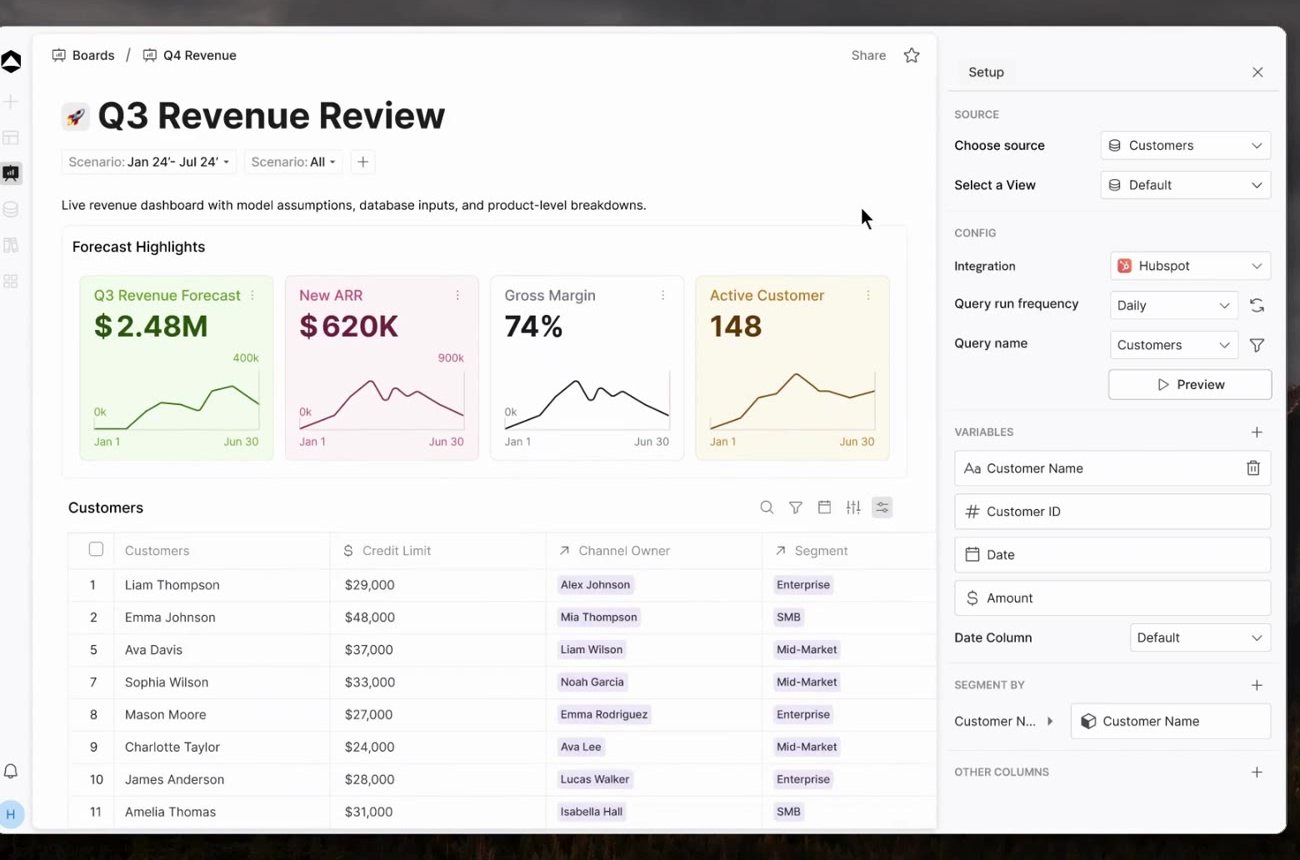
One connected financial picture
Why does $600K more revenue leave profit unchanged?
Review the additional delivery, hiring, and operating commitments before carrying the growth alternative into the next forecast.
Explore the operating forecast example
Full-year forecast = nine months of actuals + the October–December outlook. Operating profit = revenue − direct costs − people costs − operating costs.
FY 2026 · actuals through September · Illustrative dataEXPLORE THE DECISION
Why does $600K more revenue leave profit unchanged?
Q4 revenue outlook
$M · October–DecemberInspect the model inputs5 model lines
| Model line | YTD actuals | FY budget | FY forecast |
|---|---|---|---|
| $14.7M | $20.0M | $20.6M | |
| $6.1M | $8.4M | $8.7M | |
| $5.4M | $7.6M | $7.4M | |
| $1.9M | $2.8M | $2.9M | |
| $1.3M | $1.2M | $1.6M |
Scroll to inspect all columns
The example isolates the income statement. Collection timing and capital expenditure need a separate cash review.
A little more context
Questions about Budgeting & Forecasting.
How do the budget and working forecast stay connected?
Use a consistent model and dimensions for the approved budget, actuals, and forecast. Keep the budget available as the reference while scenarios let you compare new assumptions. The example labels year-to-date actuals separately from full-year plans so the periods stay clear.
What should we bring to a forecast walkthrough?
Bring an income statement, the approved budget, an actuals cutoff, and one changed department assumption. The walkthrough can focus on how your remaining-year outlook and financial definitions fit together.
What should we agree before comparing plans?
Full-year forecast = nine months of actuals + the October–December outlook. Operating profit = revenue − direct costs − people costs − operating costs.
Where can we find a starting model?
Explore templates for planning, revenue, cash, headcount and reporting. Adapt the assumptions and structure to your business, and agree access with the people who will review the work.
Explore templates