Industries · Oculon for E-commerce
E-commerceChoose growth that contributes to the business.
The same revenue can leave a different contribution. Compare channel mix with product, fulfillment, and acquisition costs before scaling the next campaign.
The business behind the numbers
Plan growth with the cost of each order in view.
For E-commerce finance and commercial teams.
Compare the same revenue
Isolate channel mix before attributing the effect to growth.
Show the variable-cost scope
Keep product, acquisition, and delivery costs visible in the contribution comparison.
Review the cash requirement
Check returns, inventory, and fulfillment before scaling the channel.
From context to the next move
Put the plan to work.
Keep the inputs, model and review connected around the work in front of you.
Connected inputs
Model the sales mix
Keep product, channel, and region assumptions visible in the revenue plan.
Explore connected dataBusiness drivers
Understand contribution
Bring product cost, returns, fulfillment, and acquisition into the review.
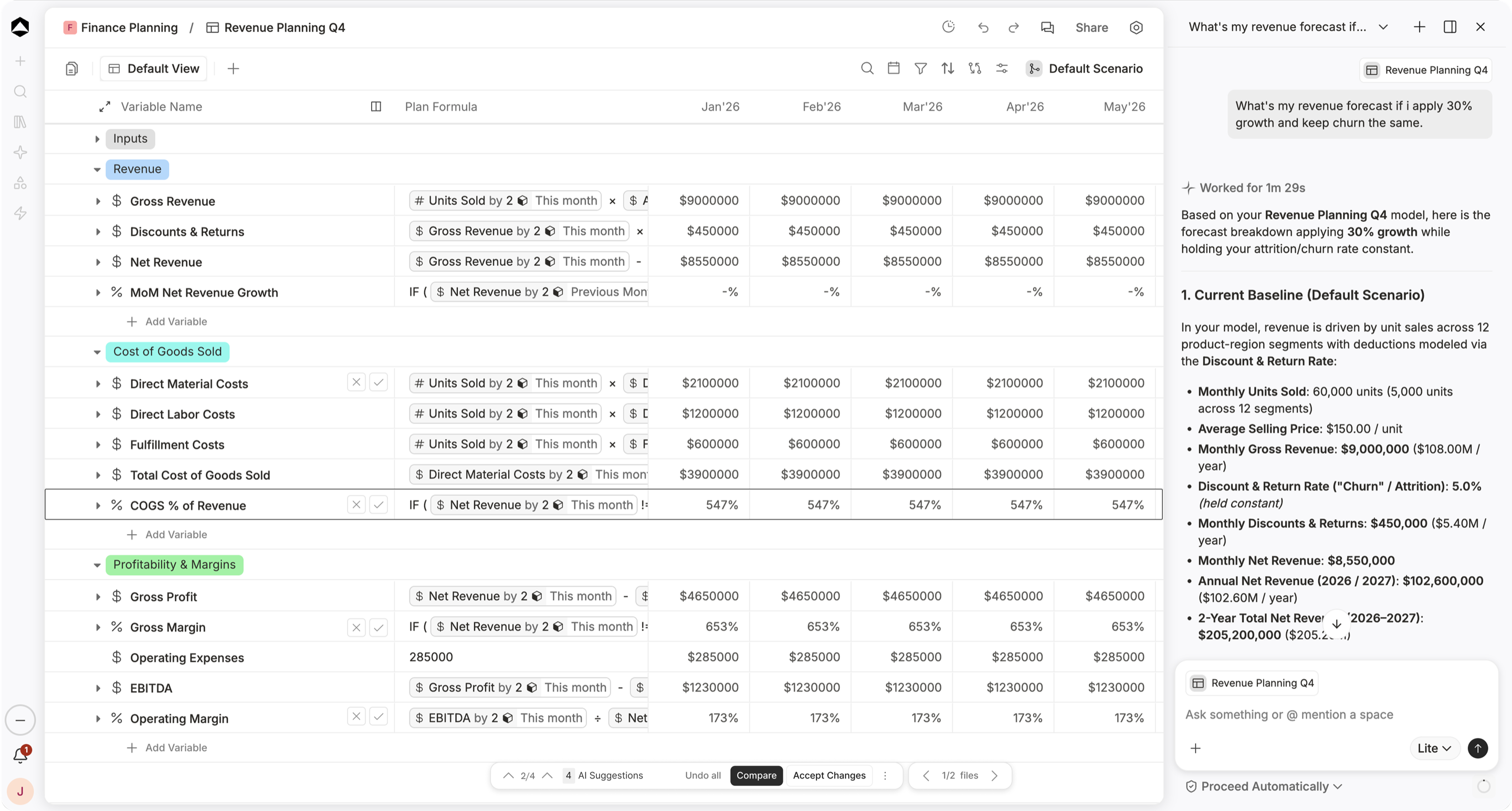
Explore financial models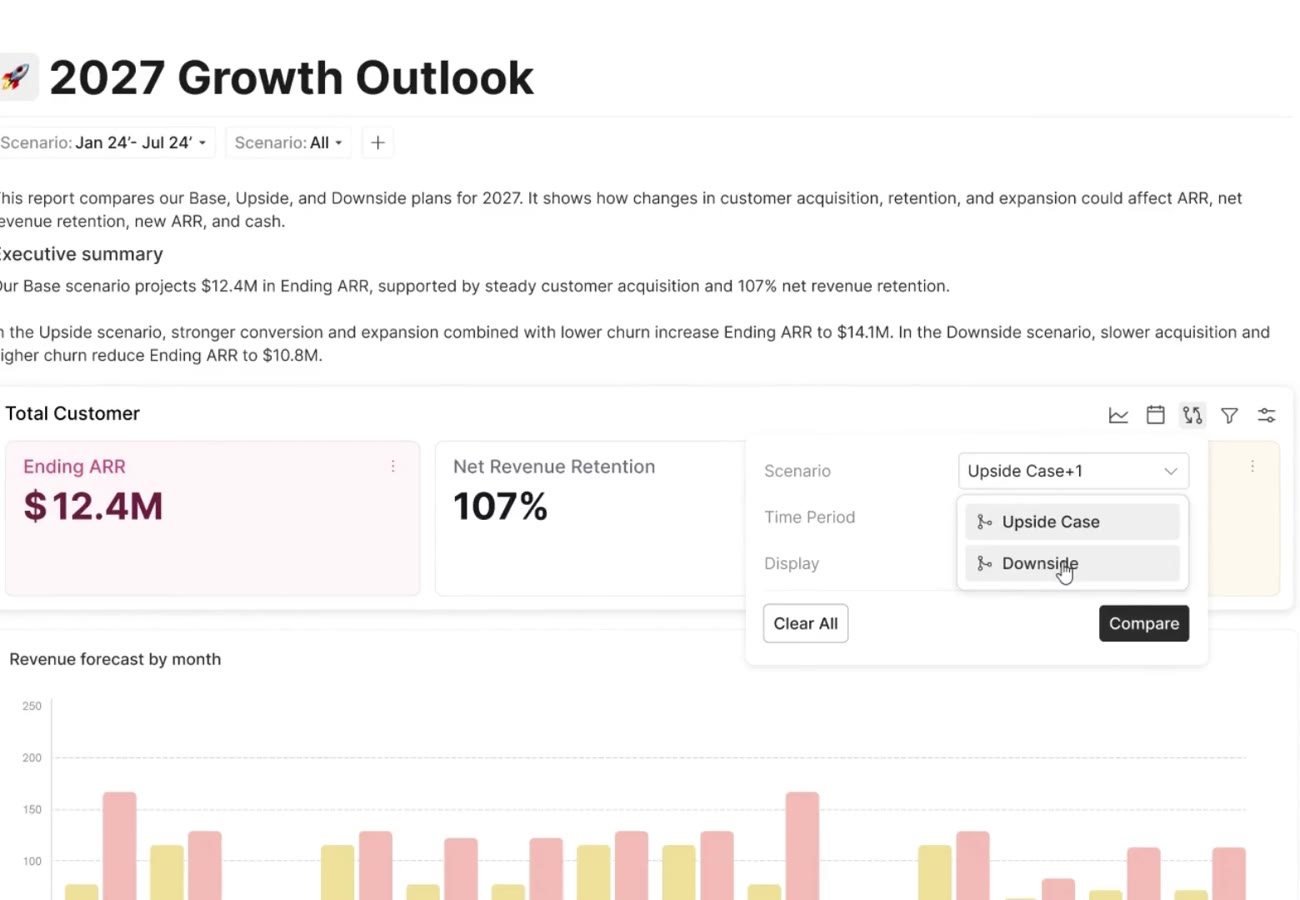
Planning choices
Connect stock and cash
Review purchasing and inventory alongside demand.
Explore scenarios
Shared review
Review the cash requirement
Review acquisition efficiency, fulfillment capacity, returns, and the inventory cash needed to support the direct-channel mix.
Explore shared boards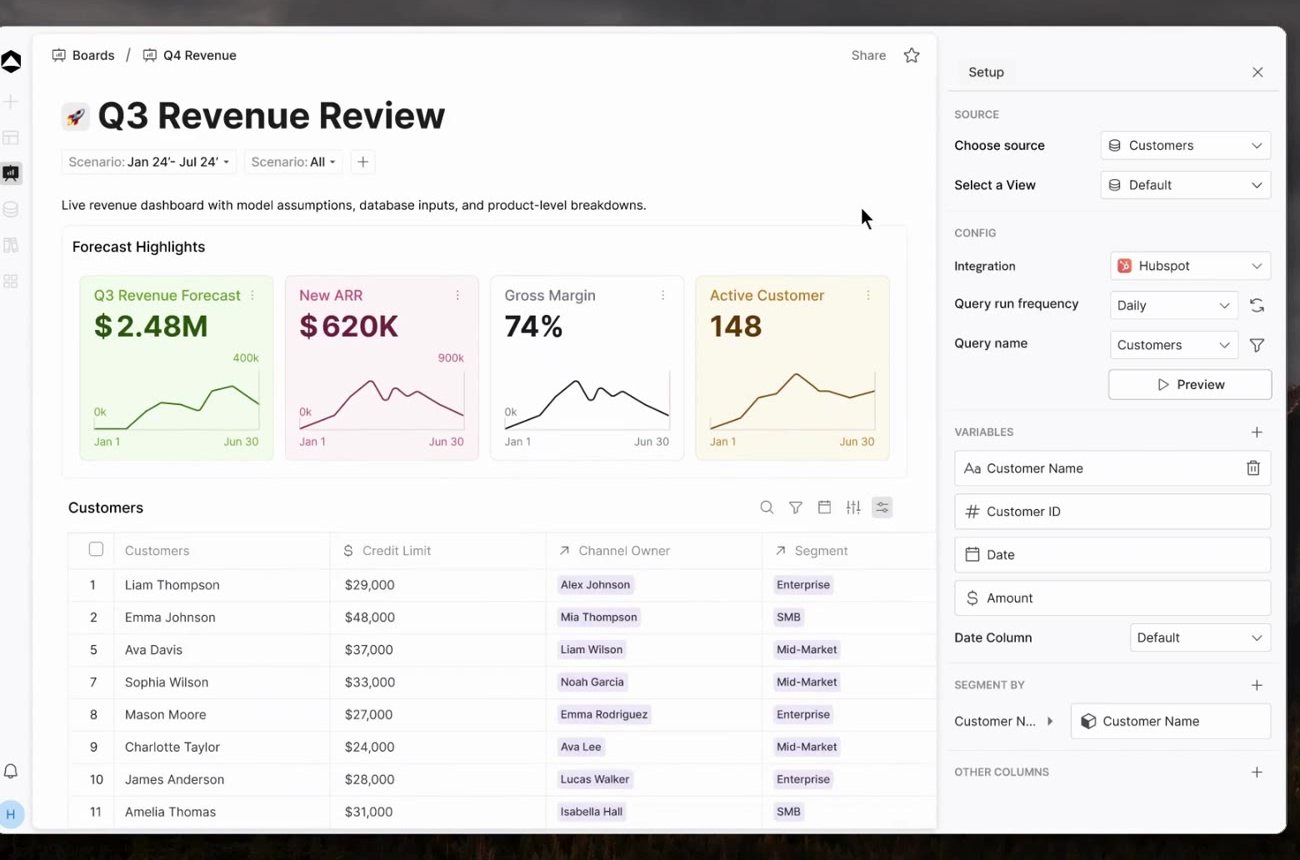
One connected financial picture
Can a different channel mix contribute more at the same revenue?
Review acquisition efficiency, fulfillment capacity, returns, and the inventory cash needed to support the direct-channel mix.
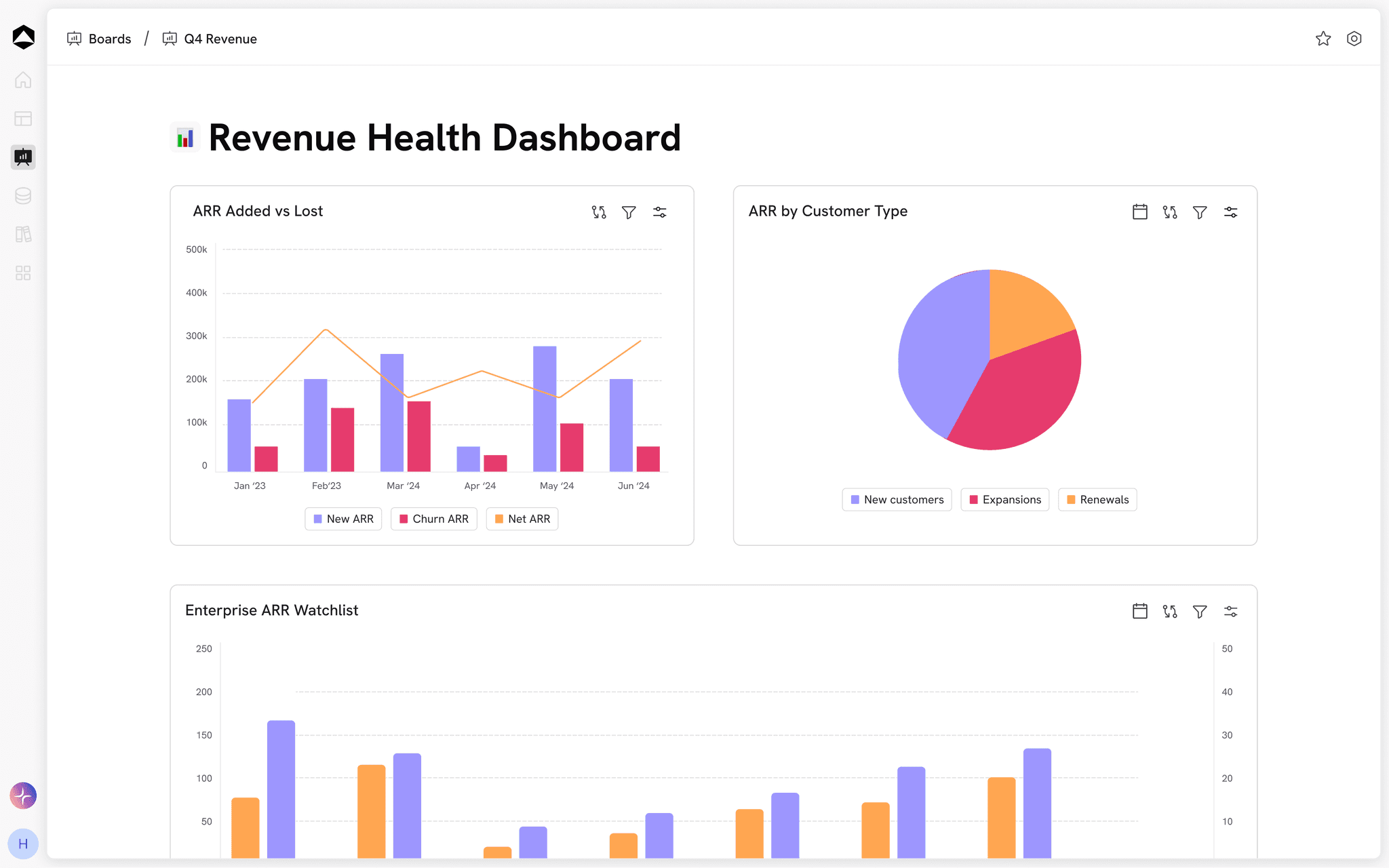
Explore the channel contribution example
Channel contribution = revenue − modeled variable costs. Period contribution is the sum of the channel results, before fixed costs.
October 2026 · sample trading period · Illustrative dataTHE ECONOMICS IN VIEW
Can a different channel mix contribute more at the same revenue?
Contribution by sales channel
$ thousands$300K revenue − $210K variable costs
$200K revenue − $140K variable costs
$100K revenue − $70K variable costs
Inspect the model inputs3 model lines
| Sales channel | Revenue | Variable costs | Contribution |
|---|---|---|---|
| $300K | $210K | $90K | |
| $200K | $140K | $60K | |
| $100K | $70K | $30K |
Scroll to inspect all columns
Variable costs include modeled product, fulfillment, and acquisition spend. Returns and stock timing need separate assumptions; contribution is not net profit.
A little more context
Questions about E-commerce.
Is contribution the same as operating profit?
No. The example subtracts modeled variable costs from revenue. Fixed operating costs and other applicable items belong in the wider financial model.
Is channel contribution the final profit measure?
No. The example excludes fixed operating costs and separates the stock and cash implications. Define returns and variable-cost scope consistently before comparing channels.
What should we agree before comparing plans?
Channel contribution = revenue − modeled variable costs. Period contribution is the sum of the channel results, before fixed costs.
Where can we find a starting model?
Explore templates for planning, revenue, cash, headcount and reporting. Adapt the assumptions and structure to your business, and agree access with the people who will review the work.
Explore templates