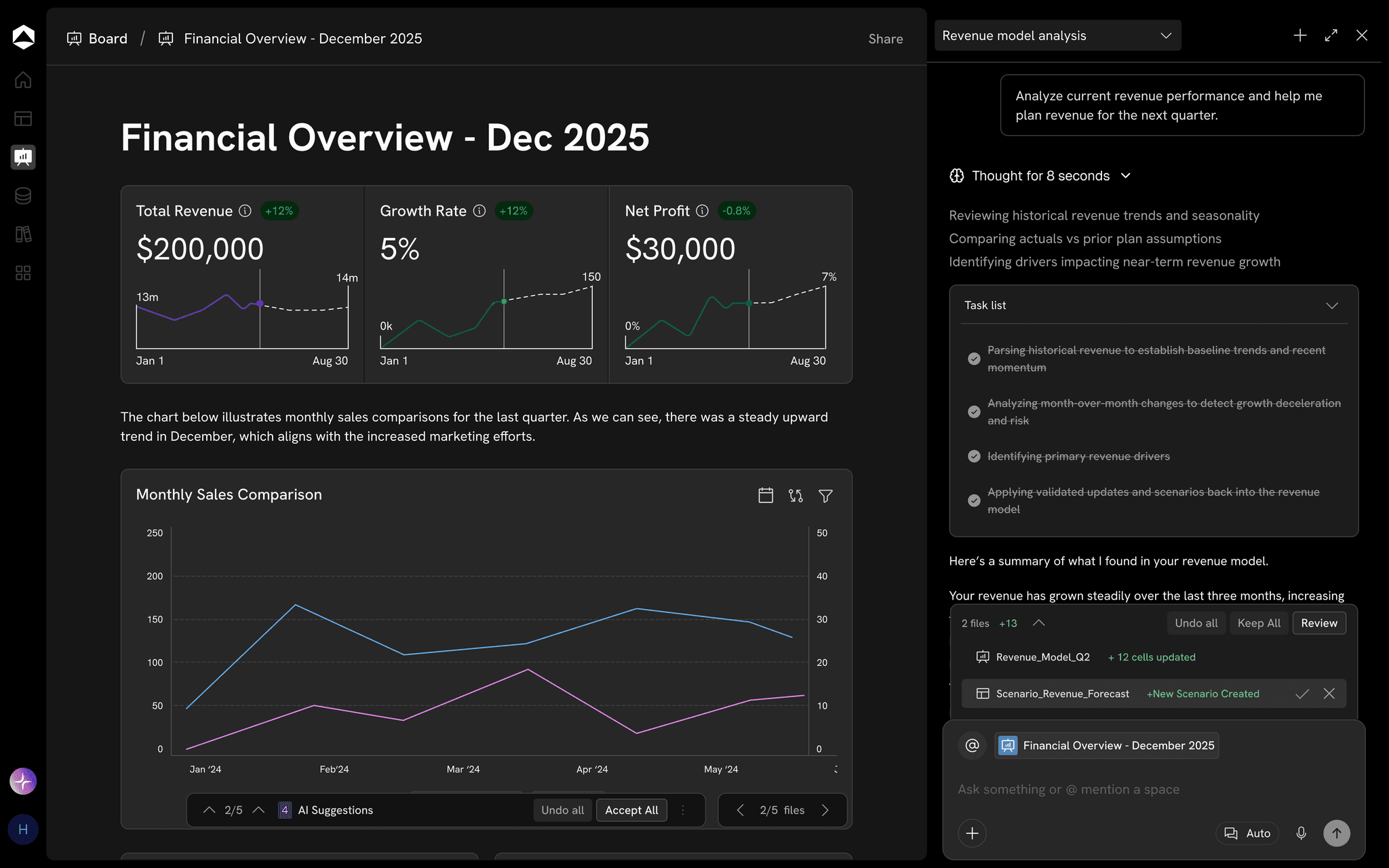
Use cases · Oculon for Revenue Planning
Revenue PlanningGive the revenue target a credible path.
Connect pipeline value, conversion, and sales capacity. Understand the assumptions behind expected bookings before they become a revenue forecast.
The decision behind the work
Follow growth from the operating driver to the forecast.
For FP&A and revenue operations.
Start from qualified demand
Define the pipeline period and value-weighted conversion assumption with RevOps.
Check the selling capacity
Compare the expected contract count with seller capacity and deal timing, rather than treating a higher rate as free growth.
Carry timing into finance
Keep contract bookings separate from the periods when revenue is recognized and customers pay.
From context to the next move
Put the plan to work.
Keep the inputs, model and review connected around the work in front of you.
Connected inputs
Connect the sales motion
Bring pipeline stages, deal timing, and commercial assumptions into the model.
Explore connected dataBusiness drivers
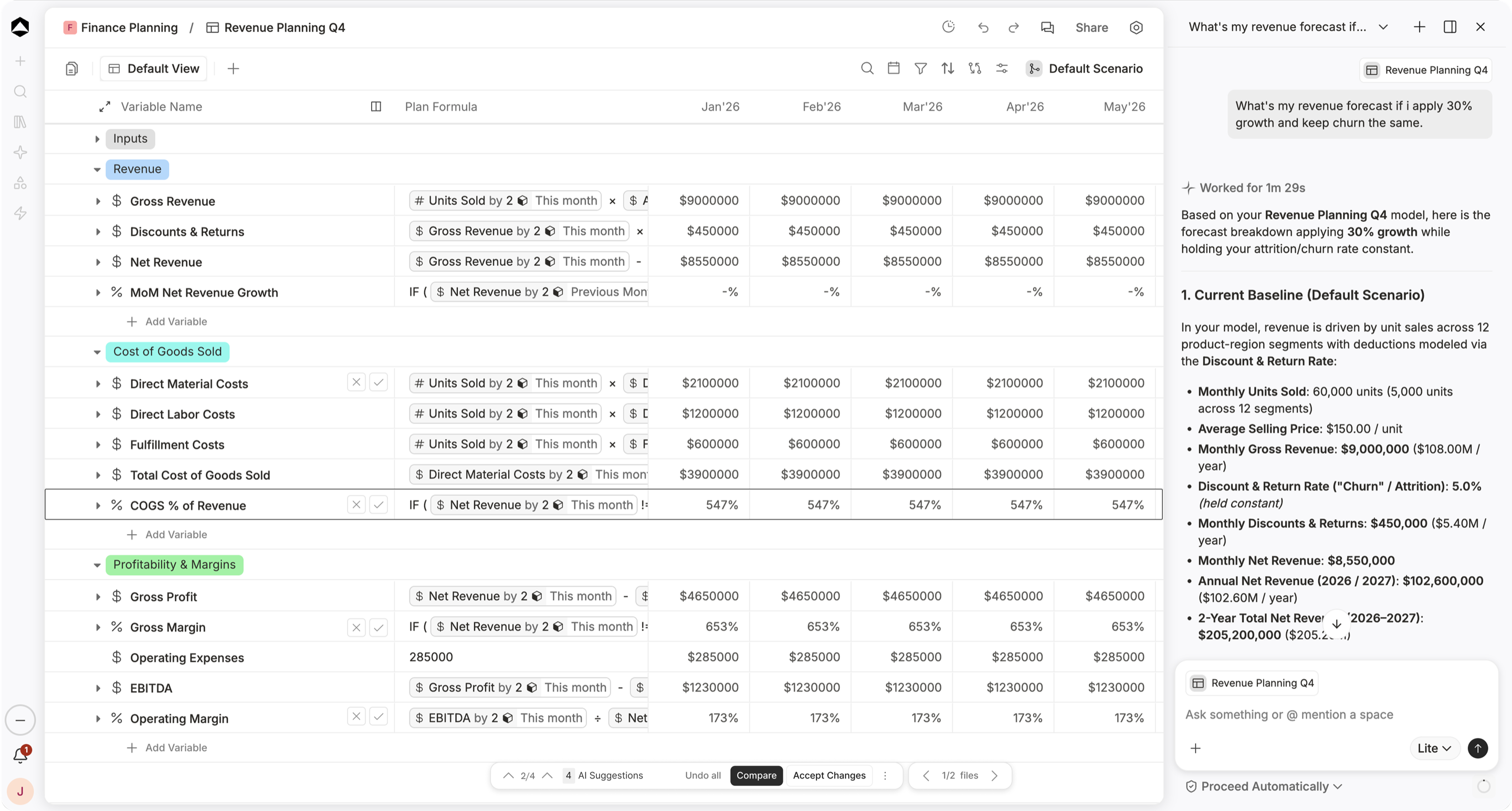
Separate the revenue story
Keep bookings, recurring revenue, recognized revenue, and collections distinct.
Explore financial models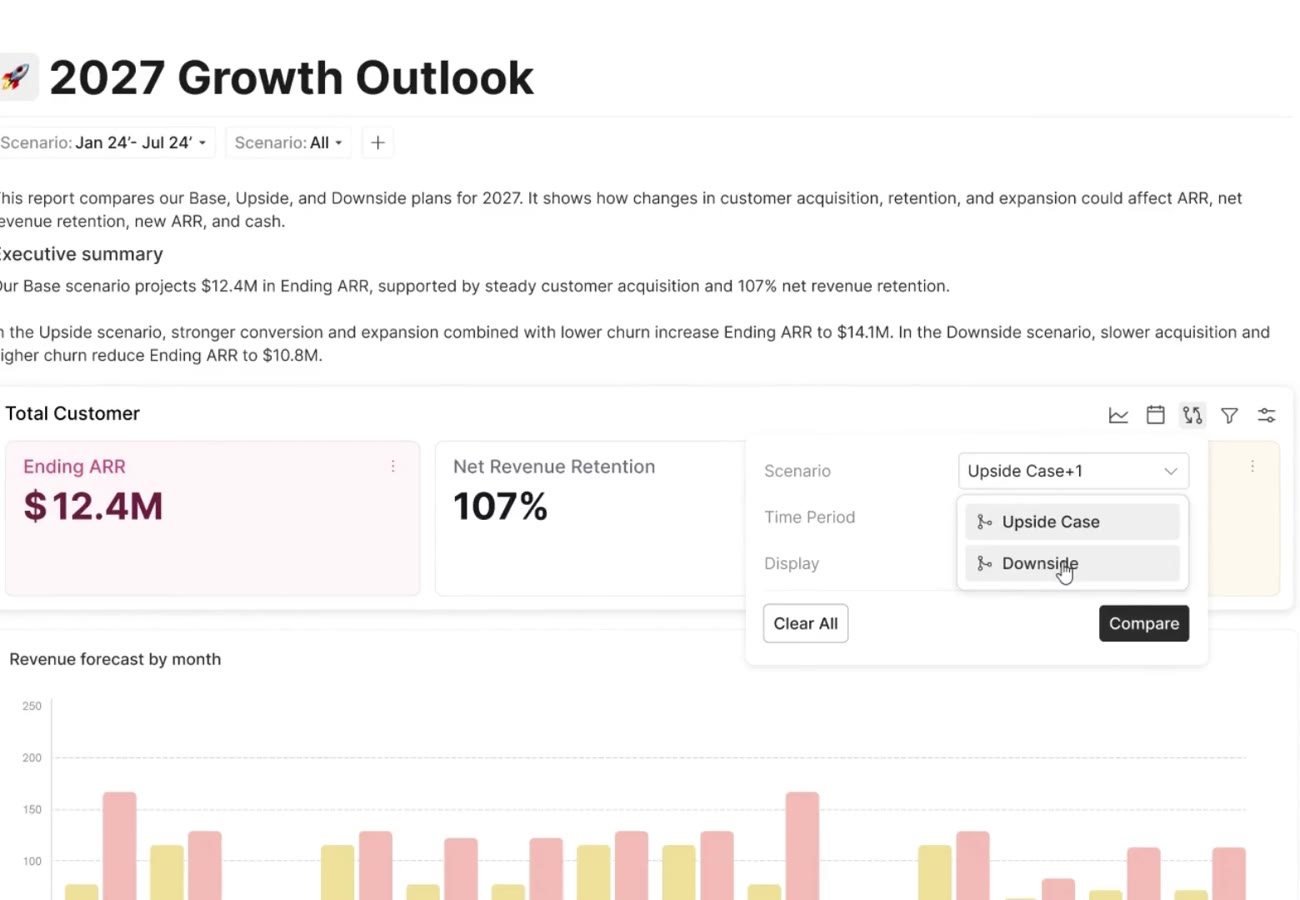
Planning choices
Pressure-test capacity
Review the growth target against rep ramp, productivity, and hiring.
Explore scenarios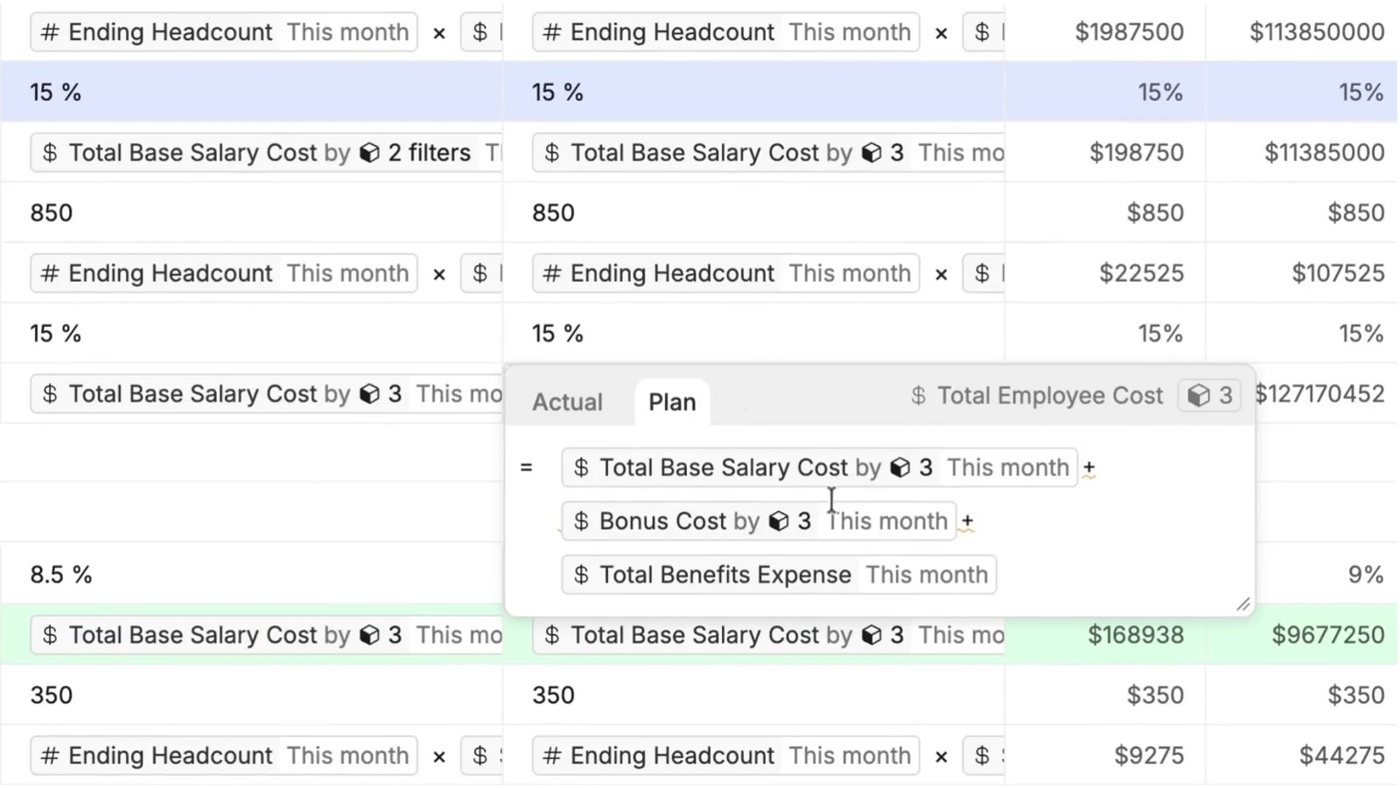
Shared review
Carry timing into finance
Review seller capacity, contract timing, revenue recognition, and annual billing before moving the booking assumption into a cash plan.
Explore shared boards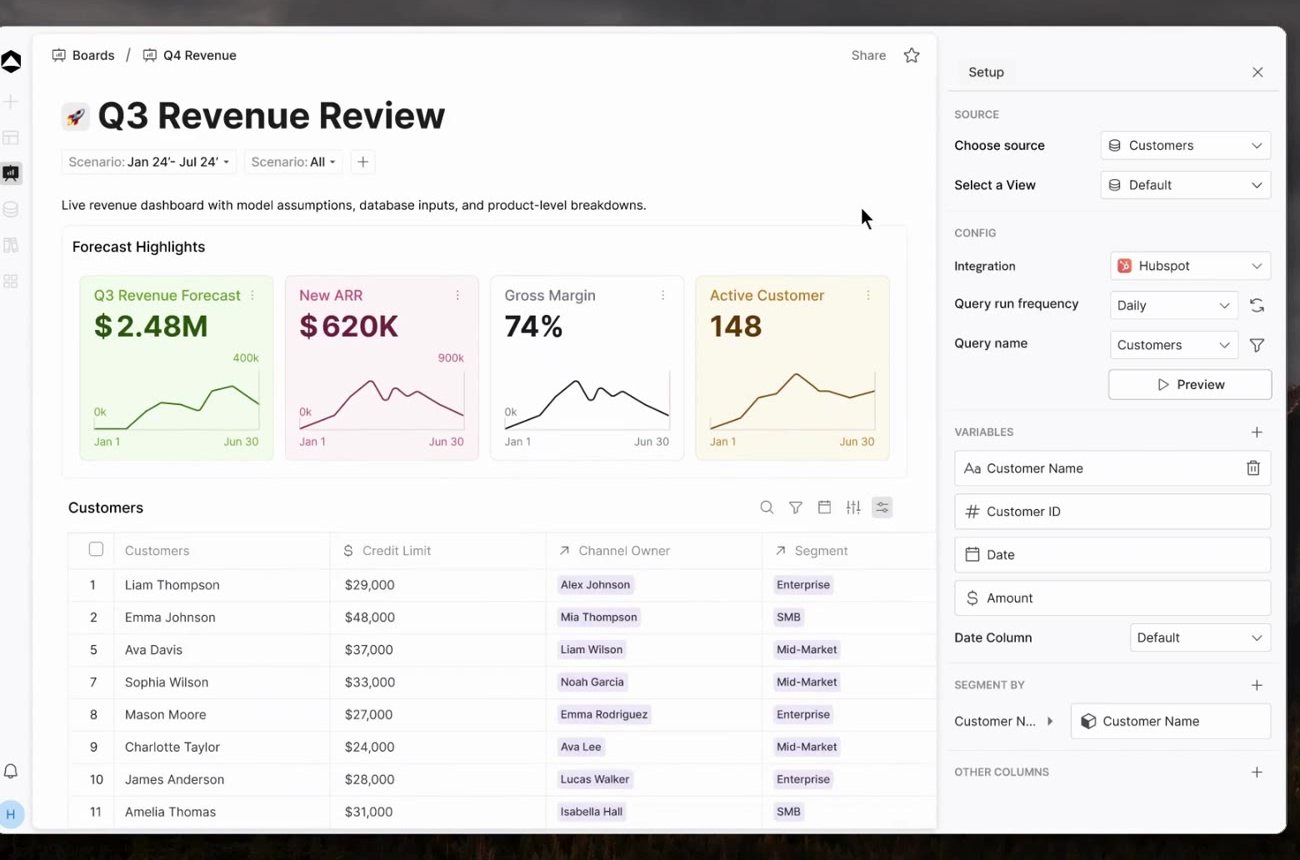
One connected financial picture
Can the same pipeline support $1.2M more bookings?
Review seller capacity, contract timing, revenue recognition, and annual billing before moving the booking assumption into a cash plan.
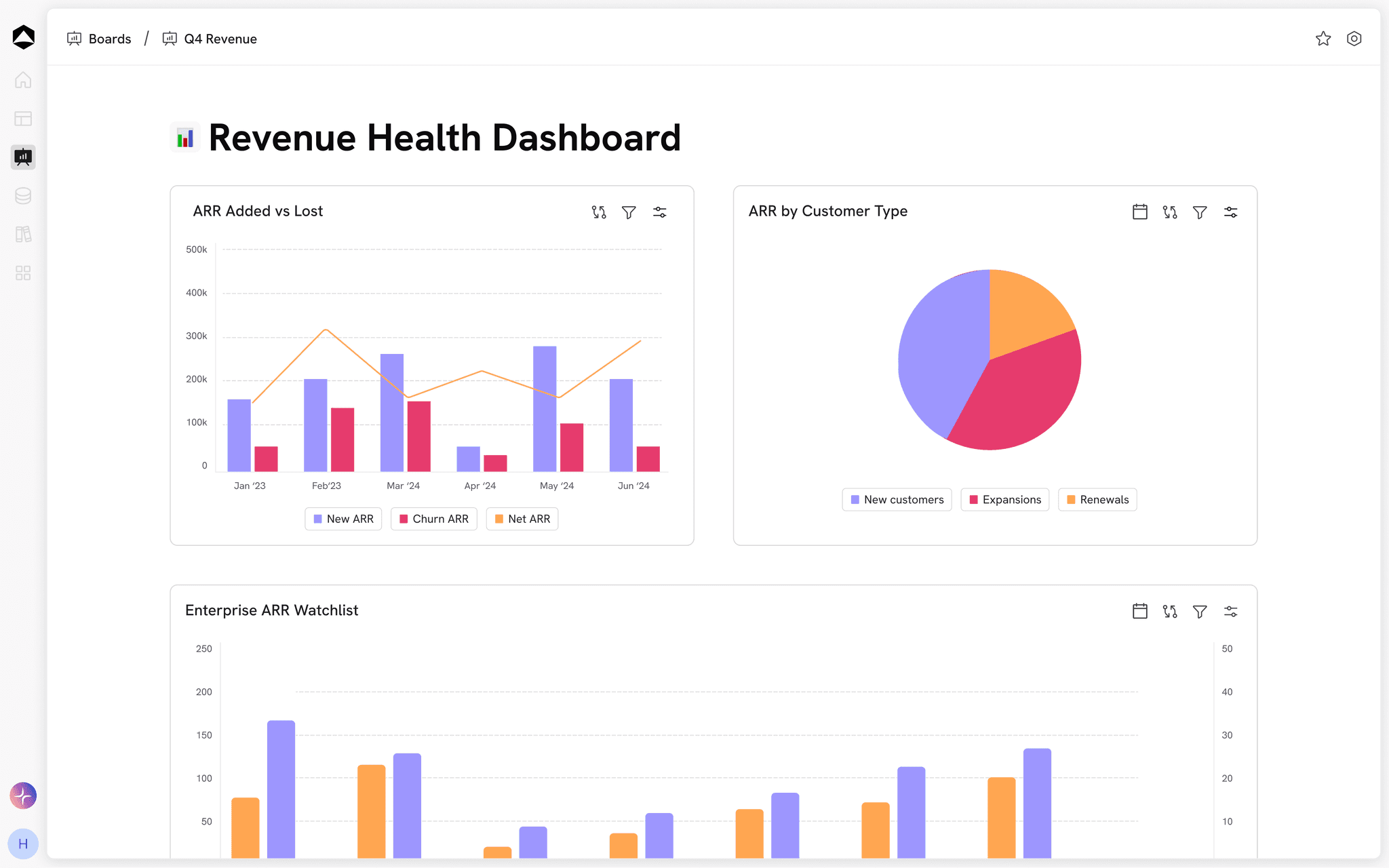
Explore the revenue outlook example
Expected bookings = qualified pipeline value × value-weighted win rate. Expected wins = bookings ÷ average contract value.
Q4 2026 · pipeline planning period · Illustrative dataEXPLORE THE DECISION
Can the same pipeline support $1.2M more bookings?
Pipeline value to expected bookings
Q4 2026At $40K per contract: 90 expected wins. Revenue recognition and collections are separate timing assumptions.
Inspect the model inputs4 model lines
| Revenue driver | Current assumption | Forecast effect | Owner |
|---|---|---|---|
| $12M | $12M available | Sales | |
| 30% | $3.6M bookings | RevOps | |
| $40K | 90 expected wins | Sales | |
| Annual | Collections timing | Finance |
Scroll to inspect all columns
Funnel counts are illustrative stage counts, not the value-weighted win-rate denominator. Bookings, recognized revenue, and collections are separate.
A little more context
Questions about Revenue Planning.
Can we model more than one revenue stream?
Use models and dimensions to represent different products, regions, customer segments, and revenue motions. Bring your pricing and recognition requirements into a walkthrough with the Oculon team.
Do the bookings in this example equal revenue?
No. A signed contract produces bookings; recognized revenue depends on the contract and delivery period, and collections depend on billing and payment timing. Review all three definitions in your model.
What should we agree before comparing plans?
Expected bookings = qualified pipeline value × value-weighted win rate. Expected wins = bookings ÷ average contract value.
Where can we find a starting model?
Explore templates for planning, revenue, cash, headcount and reporting. Adapt the assumptions and structure to your business, and agree access with the people who will review the work.
Explore templates