Industries · Oculon for SaaS
SaaSConnect retention to the plan you can fund.
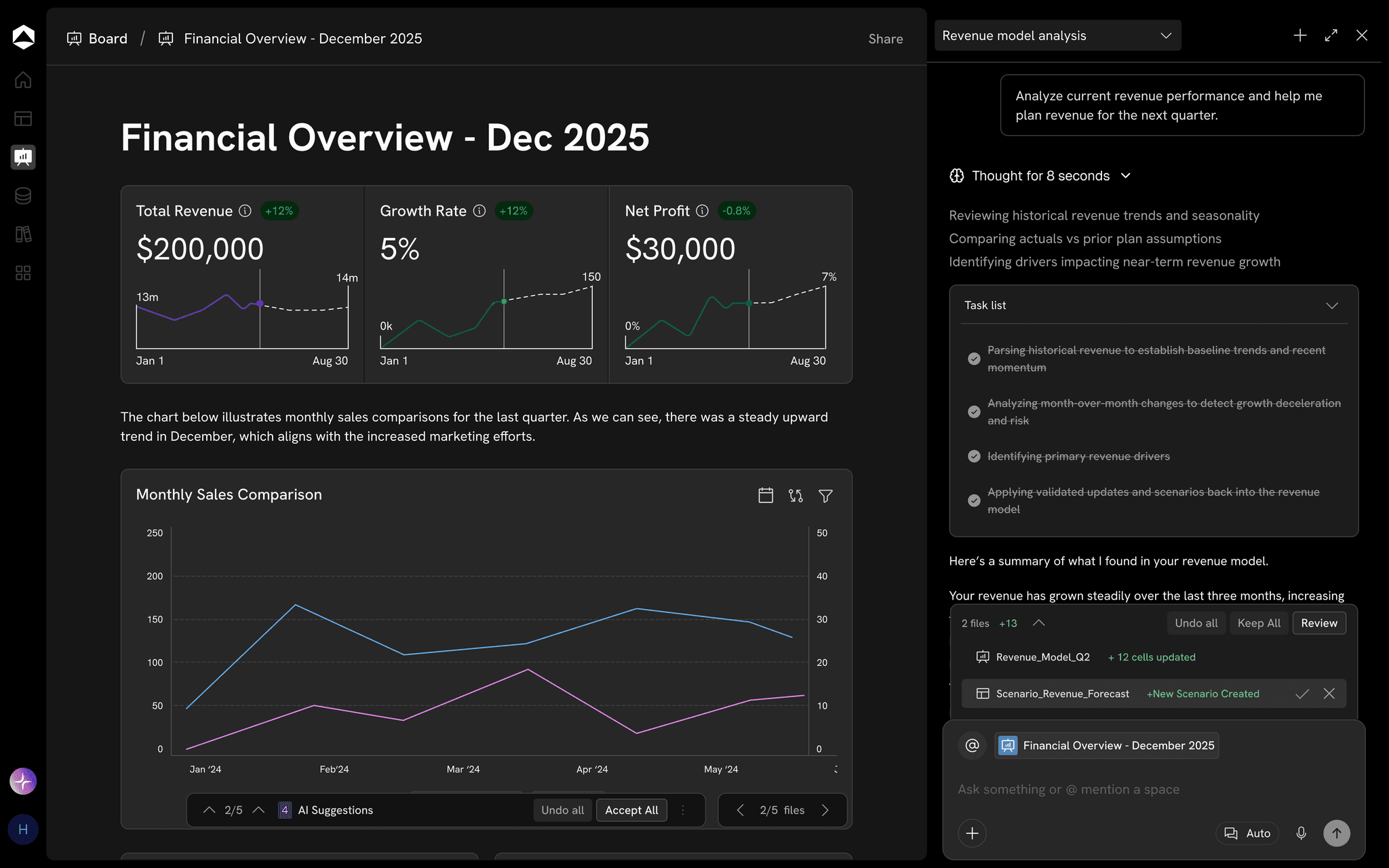
Separate acquisition, expansion, and churn. Understand what recurring growth changes—and what still needs to become revenue and cash.
The business behind the numbers
Connect the subscription drivers to the whole company.
For SaaS finance and revenue teams.
Keep the cohort clear
Separate existing-customer retention from new acquisition before measuring NRR.
Explain the ARR bridge
Reconcile each movement to the closing run rate instead of treating growth as one percentage.
Fund the plan with cash
Review delivery, billing, and collection timing before using ARR upside to justify spending.
From context to the next move
Put the plan to work.
Keep the inputs, model and review connected around the work in front of you.
Recurring revenue
Build the plan behind your ARR.
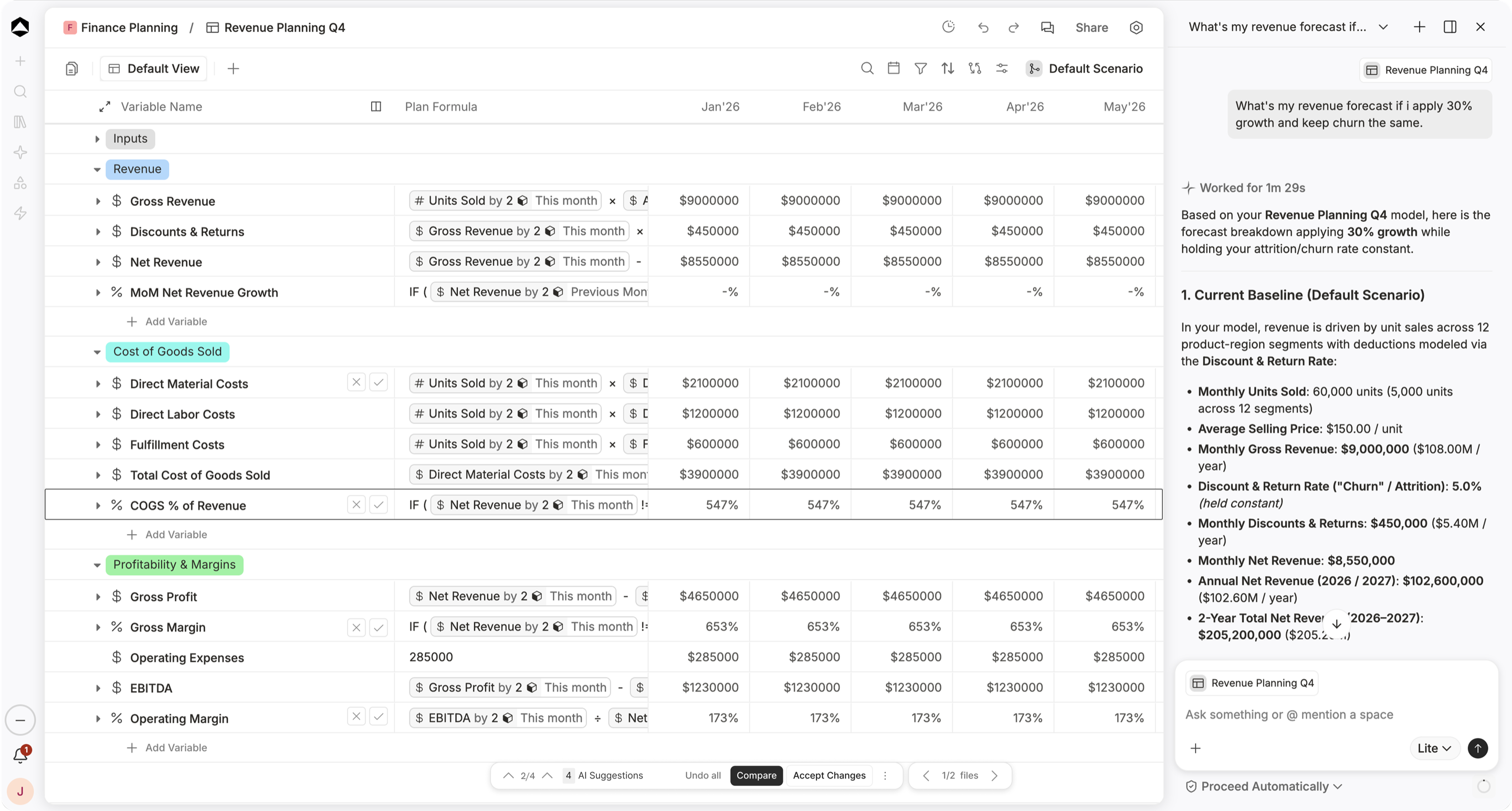
Model acquisition, expansion and retention together. Keep the drivers visible as you turn recurring growth into a revenue forecast.
Explore revenue planningGrowth decisions
See a different assumption through.
Compare a change in retention, pricing or hiring with the baseline. Review the impact before the team commits to a new plan.
Explore scenario planning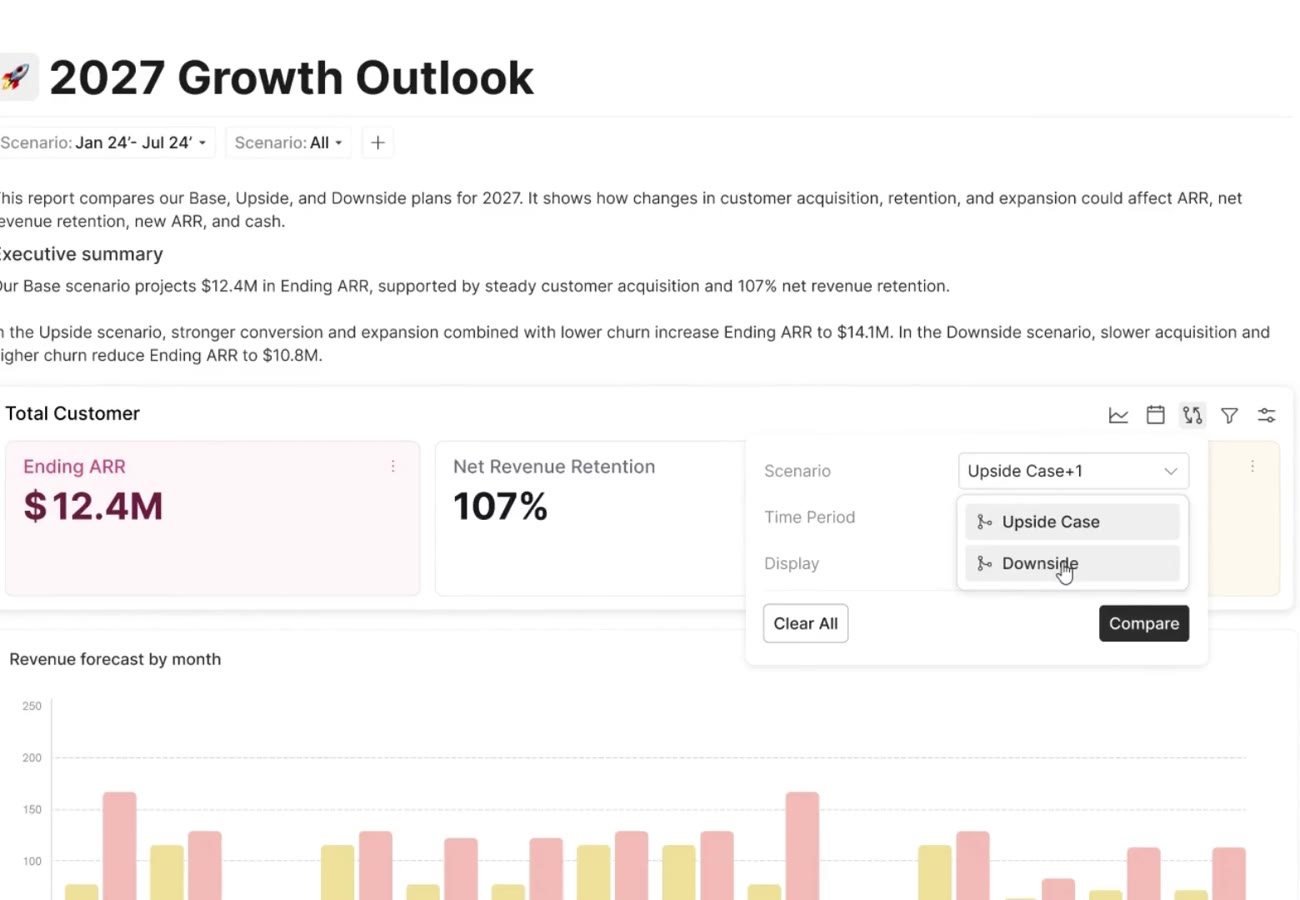
Cash and commitments
Connect growth to what it costs.
Build people costs from roles, pay and benefits. Bring those commitments into the cash plan alongside expected collections.
Explore cash and runway planning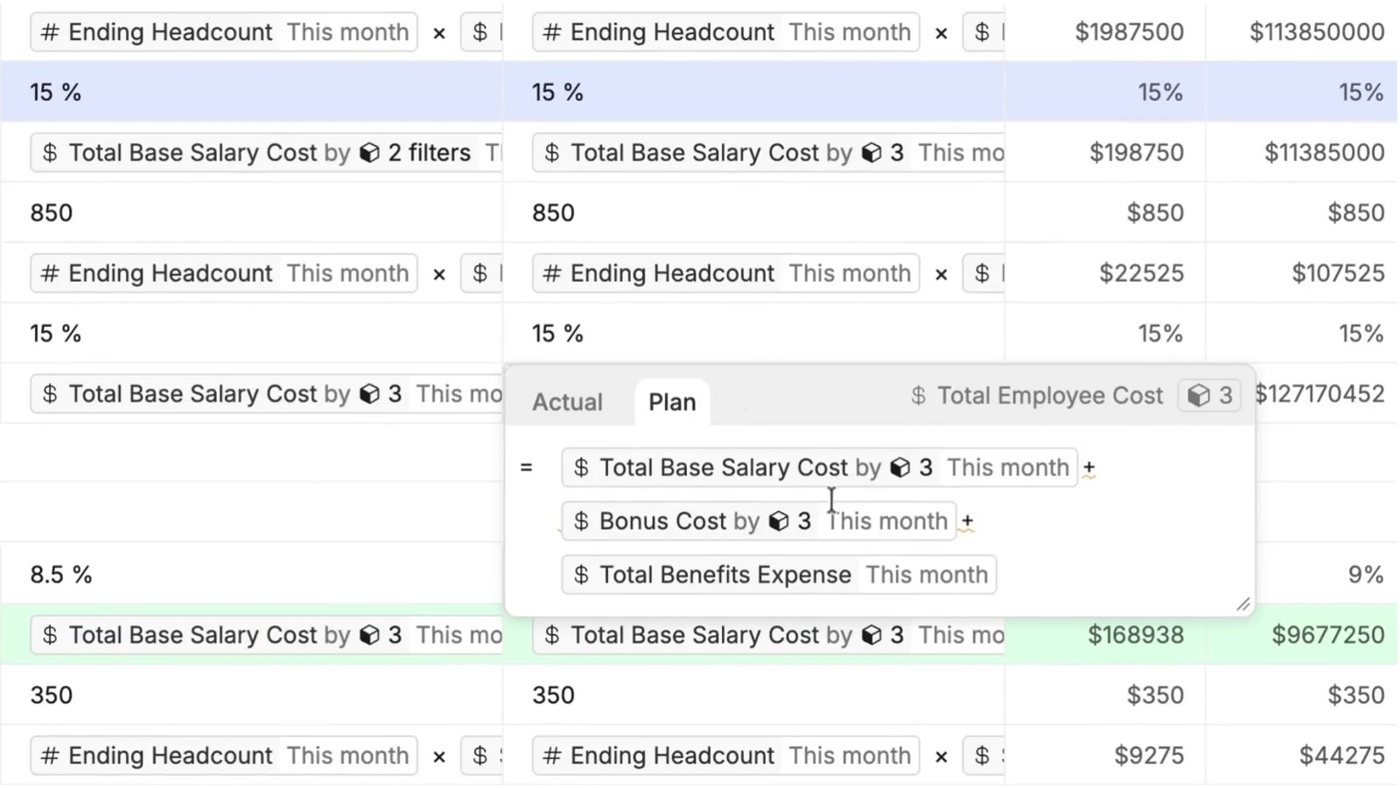
Performance and review
Bring the team into the same picture.
Put the metrics, assumptions and explanation into a shared board. Give finance, RevOps and customer success a clear view of what changed.
Explore boards and collaboration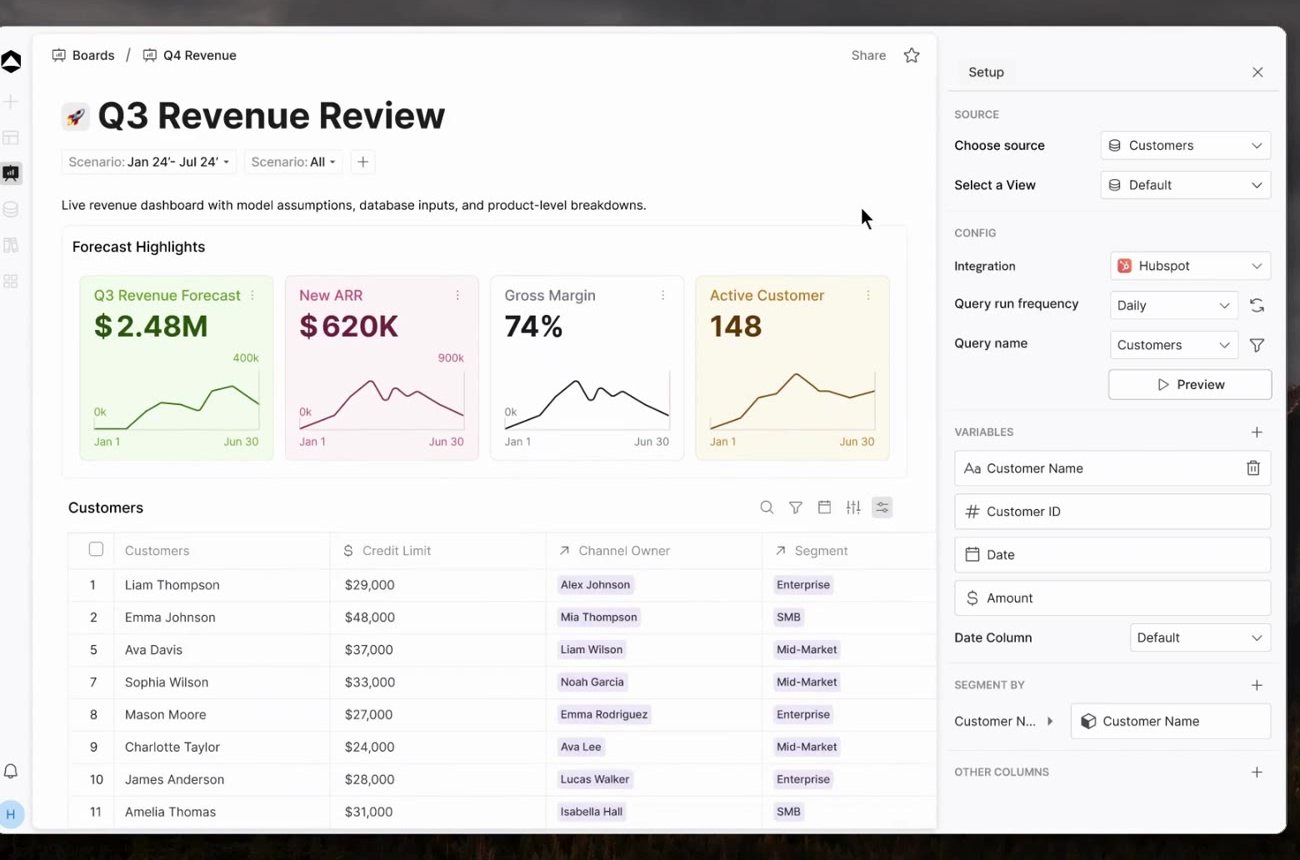
One connected financial picture
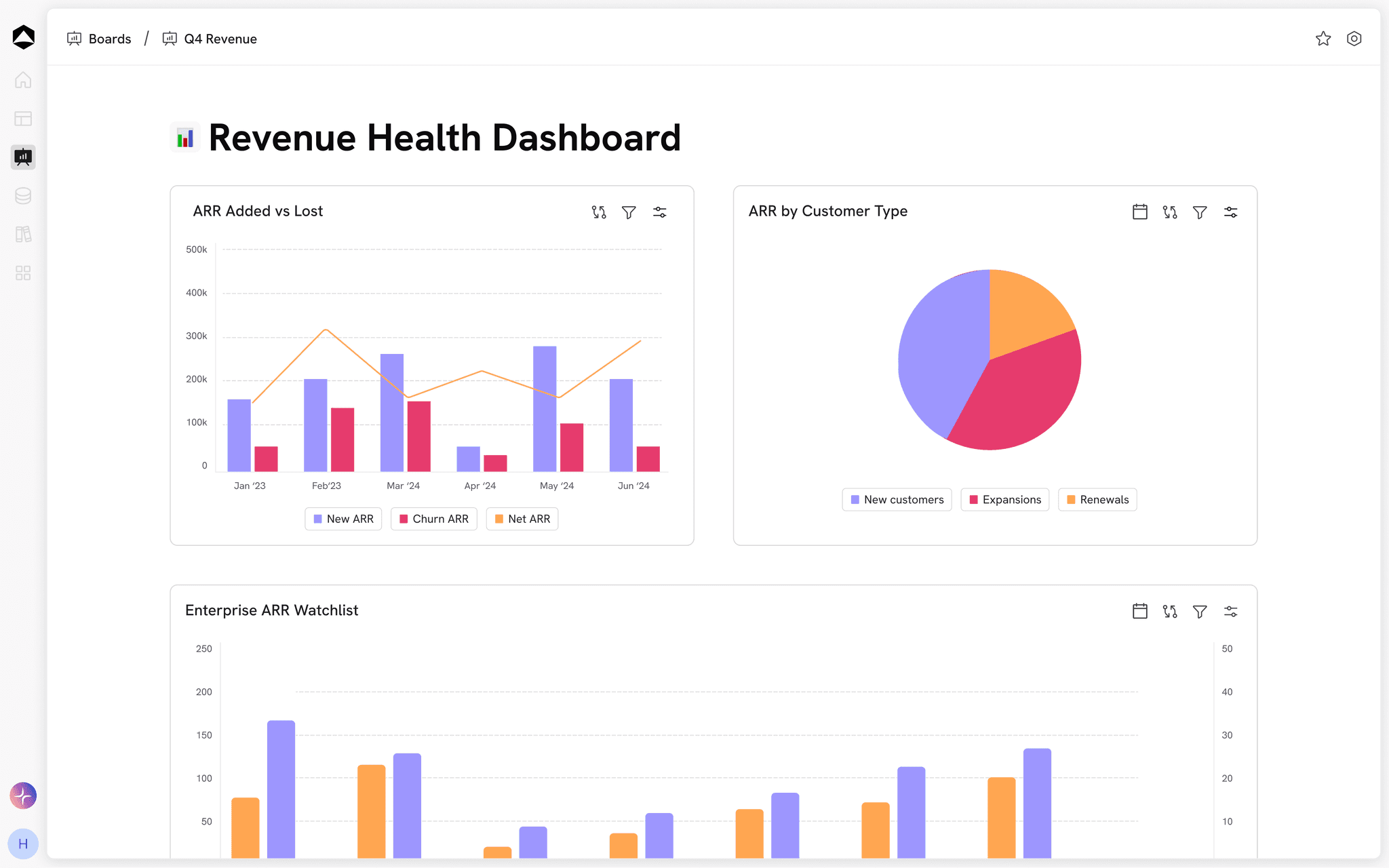
What does reducing churn by $200K change?
Review the retention assumptions by cohort, then connect the expected billing and collections to the hiring and cash plan.
Explore the subscription model example
Closing ARR = opening ARR + new ARR + expansion − churn. NRR = (opening ARR + expansion − churn) ÷ opening ARR; new customers are excluded.
FY 2026 · modeled ARR movement · Illustrative dataTHE ECONOMICS IN VIEW
What does reducing churn by $200K change?
ARR movement
$ millionsScroll for the full comparison
Inspect the model inputs3 model lines
| ARR driver | Base plan | Better retention | Context |
|---|---|---|---|
| $2.0M | $2.0M | New customers | |
| $0.8M | $0.8M | Opening cohort | |
| −$0.4M | −$0.2M | Opening cohort |
Scroll to inspect all columns
ARR is a run rate, not recognized revenue or cash. Contraction is included in the sample churn amount; billing and collection timing are excluded.
A little more context
Questions about SaaS.
Does ARR equal recognized revenue or cash?
No. ARR is a recurring-revenue metric. Revenue recognition, invoicing, and cash collection have their own timing and definitions, which should stay distinct in the model.
Does higher ARR immediately increase available cash?
No. Contract timing, revenue recognition, billing, and customer payments determine when recurring growth becomes revenue and cash. The ARR bridge isolates subscription movements.
What should we agree before comparing plans?
Closing ARR = opening ARR + new ARR + expansion − churn. NRR = (opening ARR + expansion − churn) ÷ opening ARR; new customers are excluded.
Where can we find a starting model?
Explore templates for planning, revenue, cash, headcount and reporting. Adapt the assumptions and structure to your business, and agree access with the people who will review the work.
Explore templates