Teams · Oculon for Scaling Finance
Scaling FinanceGive the next budget owner a clear starting point.
As the business grows, more people shape the plan. Start with shared definitions, then bring each owner into the assumptions they need to review.
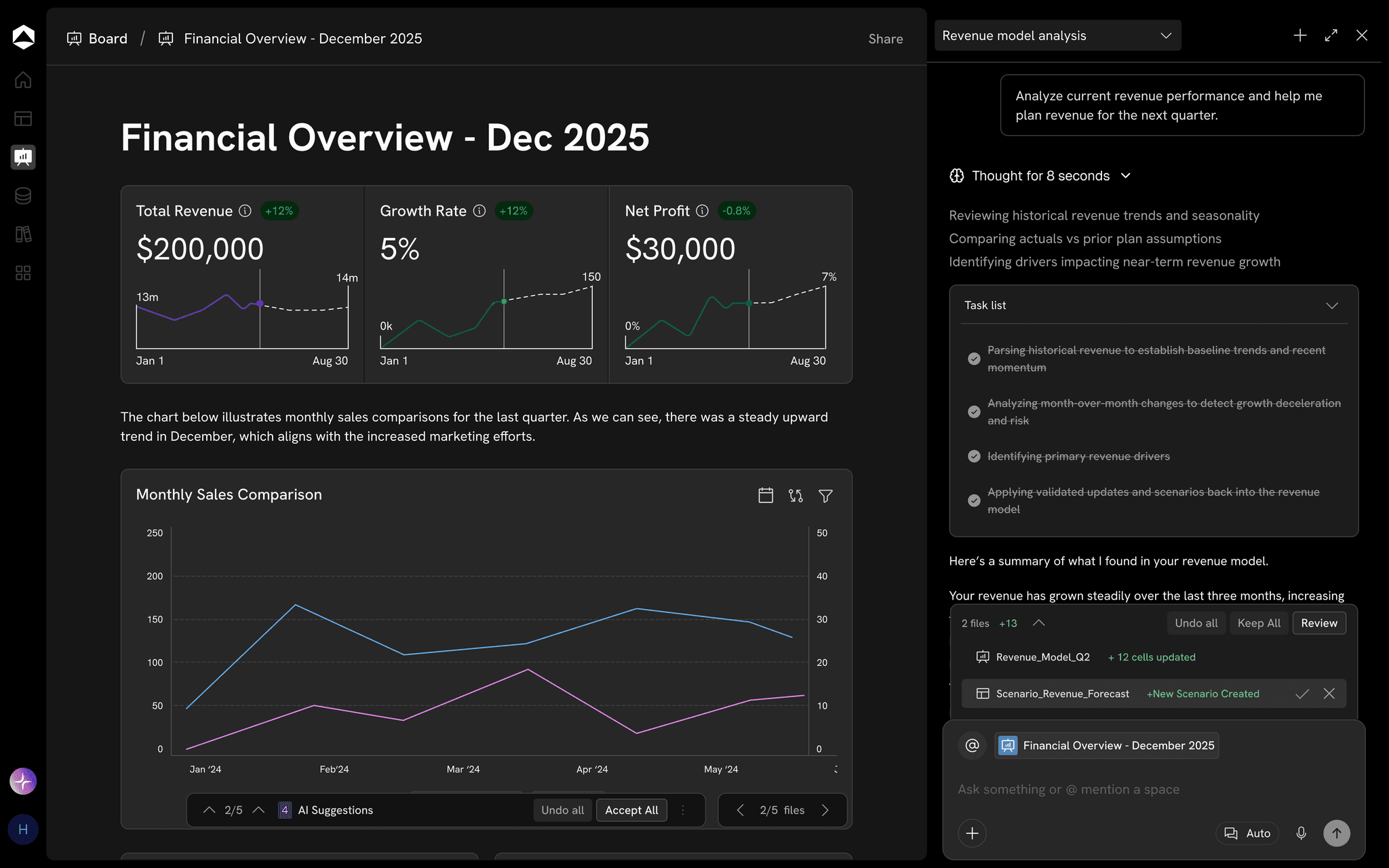
A shared starting point
Grow the planning conversation without losing its context.
For Growing finance and operating teams.
Start with one cycle
Agree the close, forecast reference, and definitions for the first finance review.
Give ownership a boundary
Assign the assumptions each department knows, with a clear review responsibility.
Expand deliberately
Add capacity and inventory when the operating questions are ready to enter the financial plan.
From context to the next move
Put the plan to work.
Keep the inputs, model and review connected around your team’s decisions.
Connected inputs
Connect the starting point
Bring existing systems and spreadsheet models into the review.
Explore connected data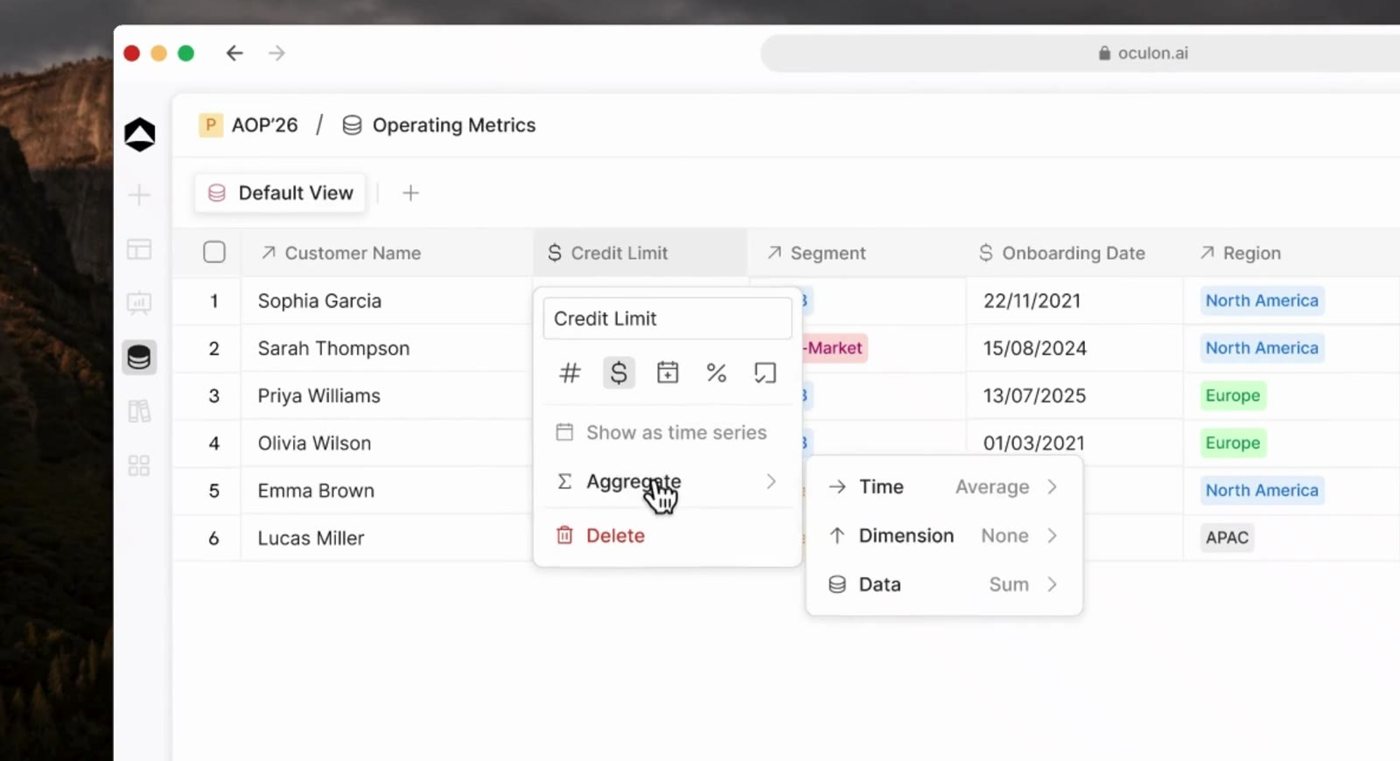
Business drivers
Keep business logic shared
Use a common context for the relationships and assumptions behind the plan.
Explore financial models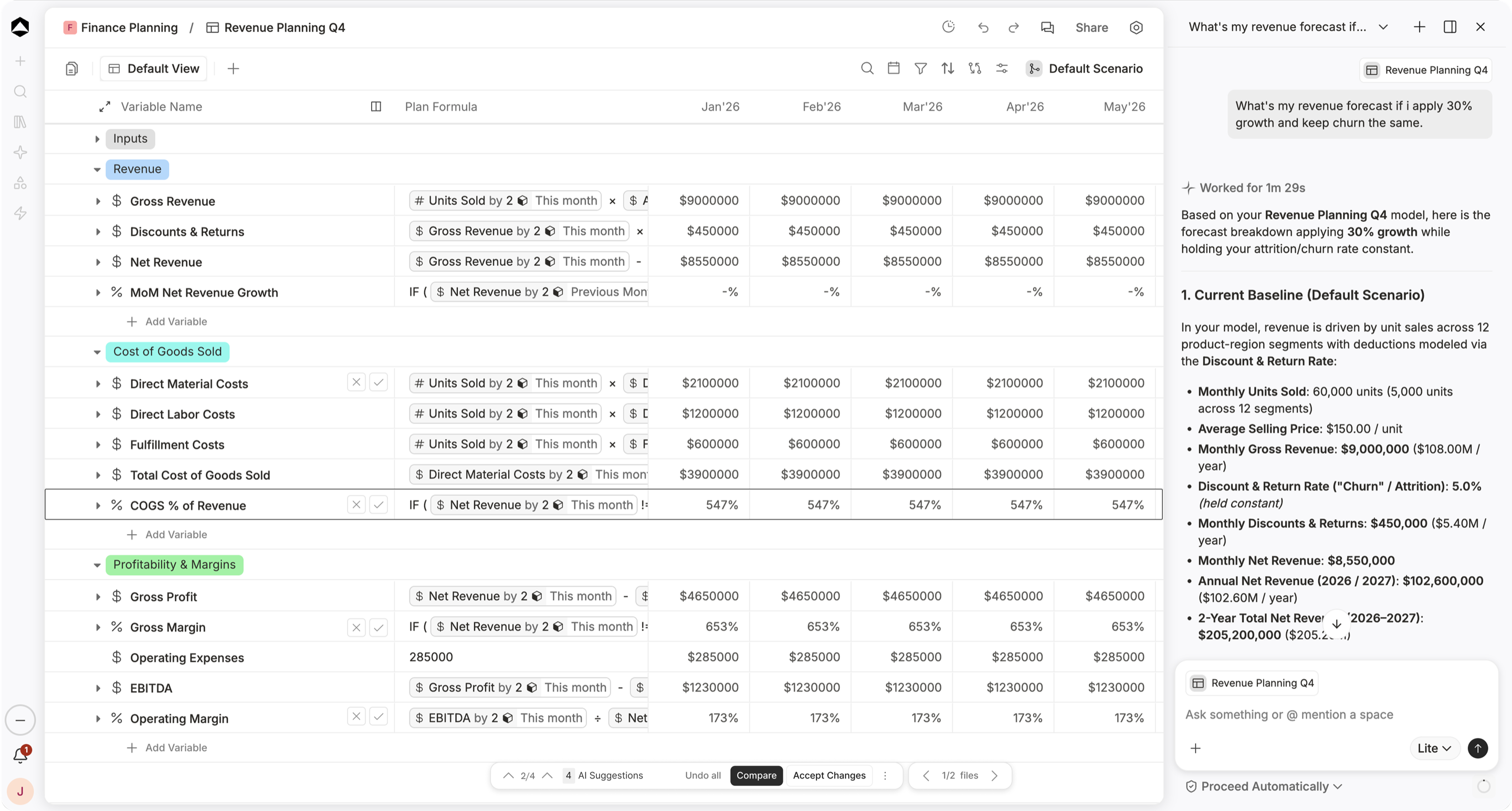
Planning choices
Bring teams in deliberately
Keep access and ownership clear as participation grows.
Explore scenarios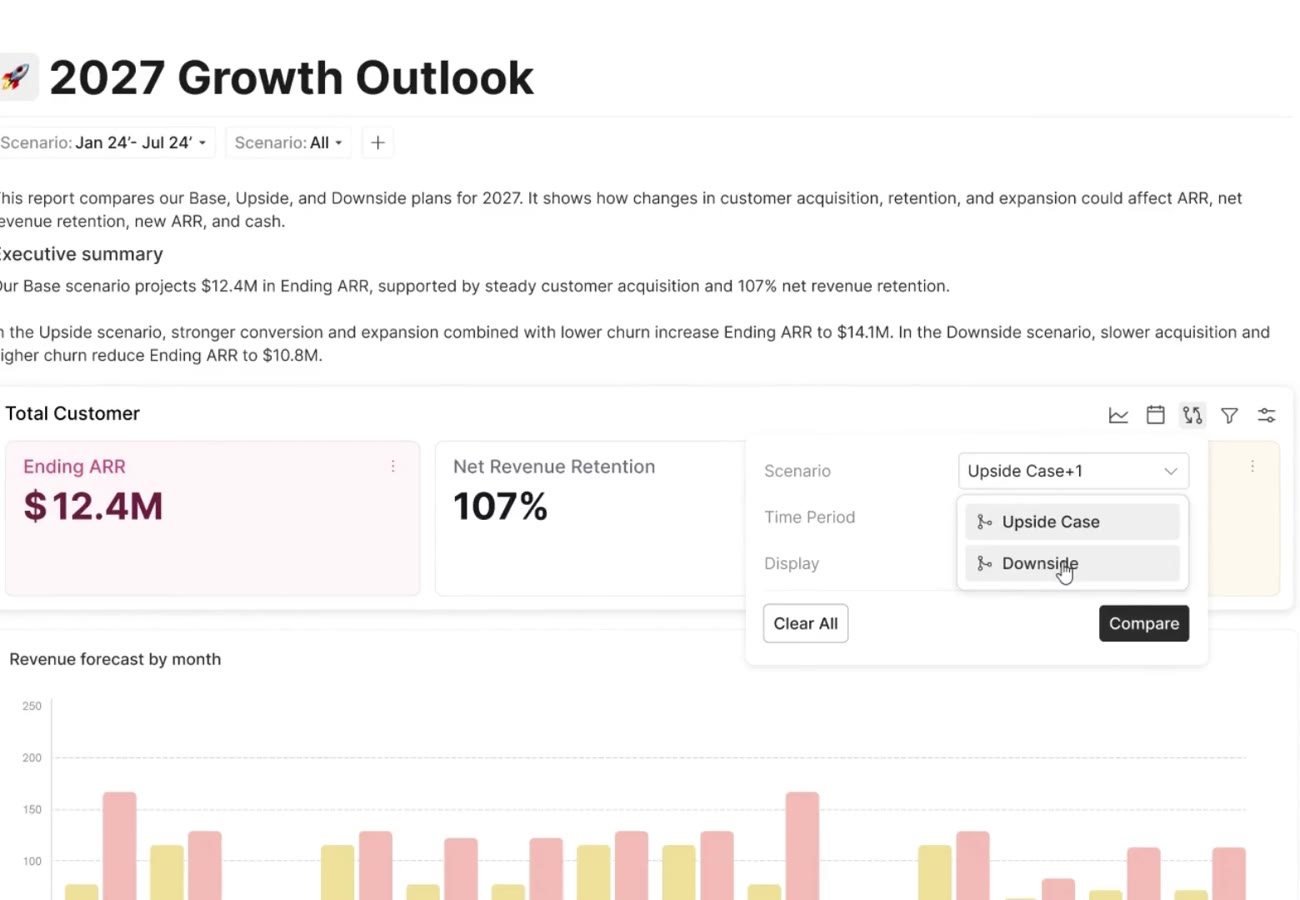
Shared review
Expand deliberately
Start with one agreed model and three finance-owned definitions, then add operating owners with a clear review responsibility.
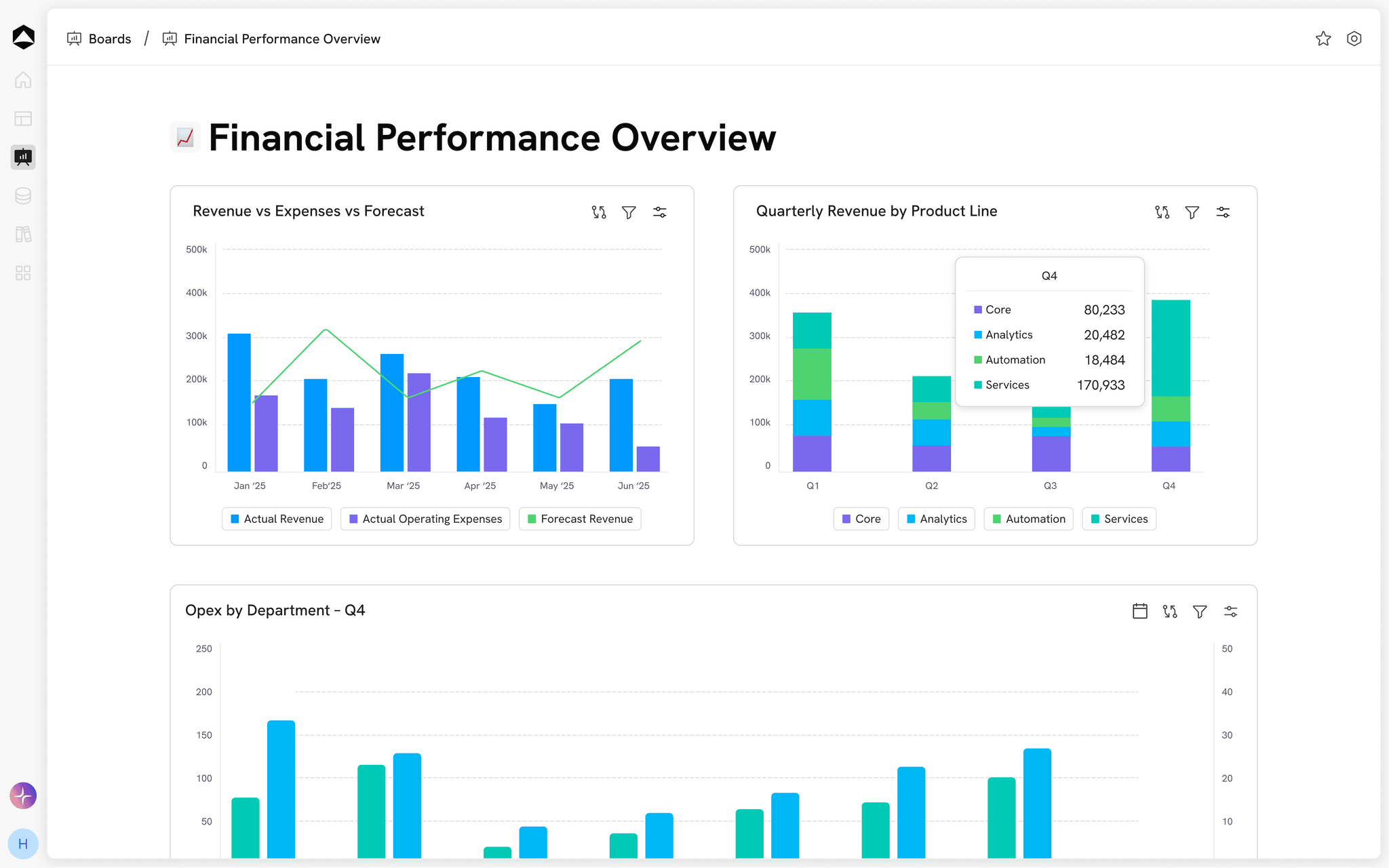
Explore shared boards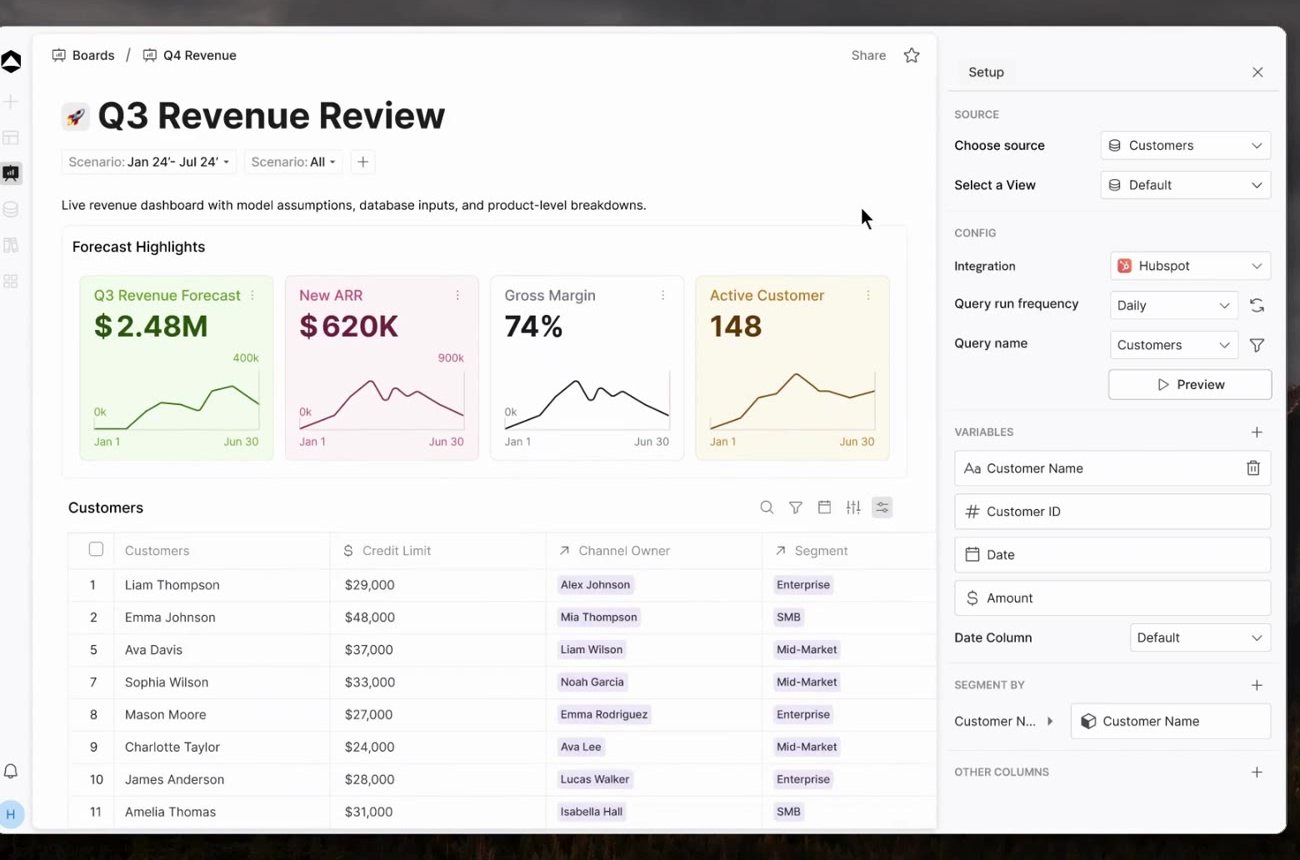
One connected financial picture
What changes when operating teams join the forecast?
Start with one agreed model and three finance-owned definitions, then add operating owners with a clear review responsibility.
Explore the finance operating foundation example
The planning map identifies the owner and business definition for each area. Bookings remain separate from collections; people costs use loaded compensation.
October 2026 · Forecast 04 · Illustrative dataA BRIEF FOR THE NEXT REVIEW
What changes when operating teams join the forecast?
From business systems to shared decisions
Connected planning contextFinance · Bookings ≠ collections
Finance · Loaded compensation
Finance · Department spend
Inspect the review context3 review items
| Planning area | Owner | Shared definition | Review |
|---|---|---|---|
| Finance | Bookings ≠ collections | Reviewed | |
| Finance | Loaded compensation | Reviewed | |
| Finance | Department spend | In review |
Scroll to inspect all columns
The example is an adoption sequence, not a bulk import or automatic permission setup. Confirm source connections, access, and collaboration for your team.
A little more context
Questions about Scaling Finance.
How should access evolve as more teams join?
Start with the views and assumptions each role needs. Use permissions to control access and keep ownership clear. Review those boundaries as the planning process expands.
Where should a growing team start?
Pick one planning cycle, one baseline, and a small set of definitions the team can agree. Review source setup and access, then add owners and planning areas as the operating questions become clear.
What should we agree before comparing plans?
The planning map identifies the owner and business definition for each area. Bookings remain separate from collections; people costs use loaded compensation.
Where can we find a starting model?
Explore templates for planning, revenue, cash, headcount and reporting. Adapt the assumptions and structure to your business, and agree access with the people who will review the work.
Explore templates